A brick is a rectangular block made from clay, concrete, or other materials. These blocks are used to build walls, pavements, and structures. Bricks are usually laid with mortar, which binds them together.
Bricks are one of the oldest building materials in human history. From ancient houses to modern buildings, bricks have always played a major role in construction. If you are planning a project or simply want to understand construction better, learning about the different types of bricks is very useful.
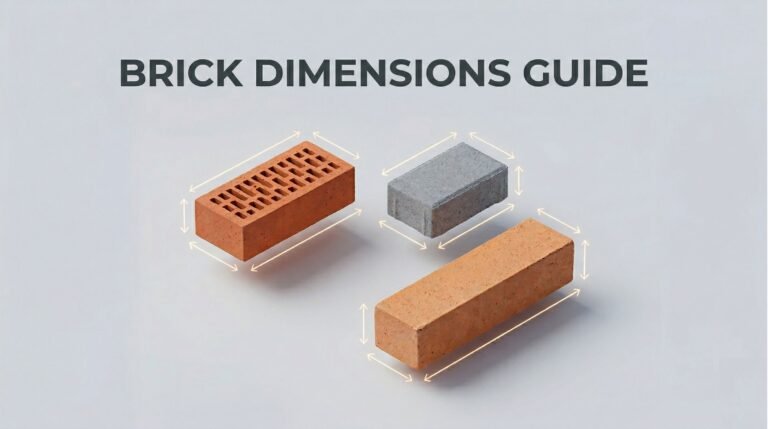
Before we look at the specific types, it is very important to understand that the physical dimensions matter just as much as the material. If you have not decided on the dimensions yet, please read our detailed Brick Size Dimensions Guide.
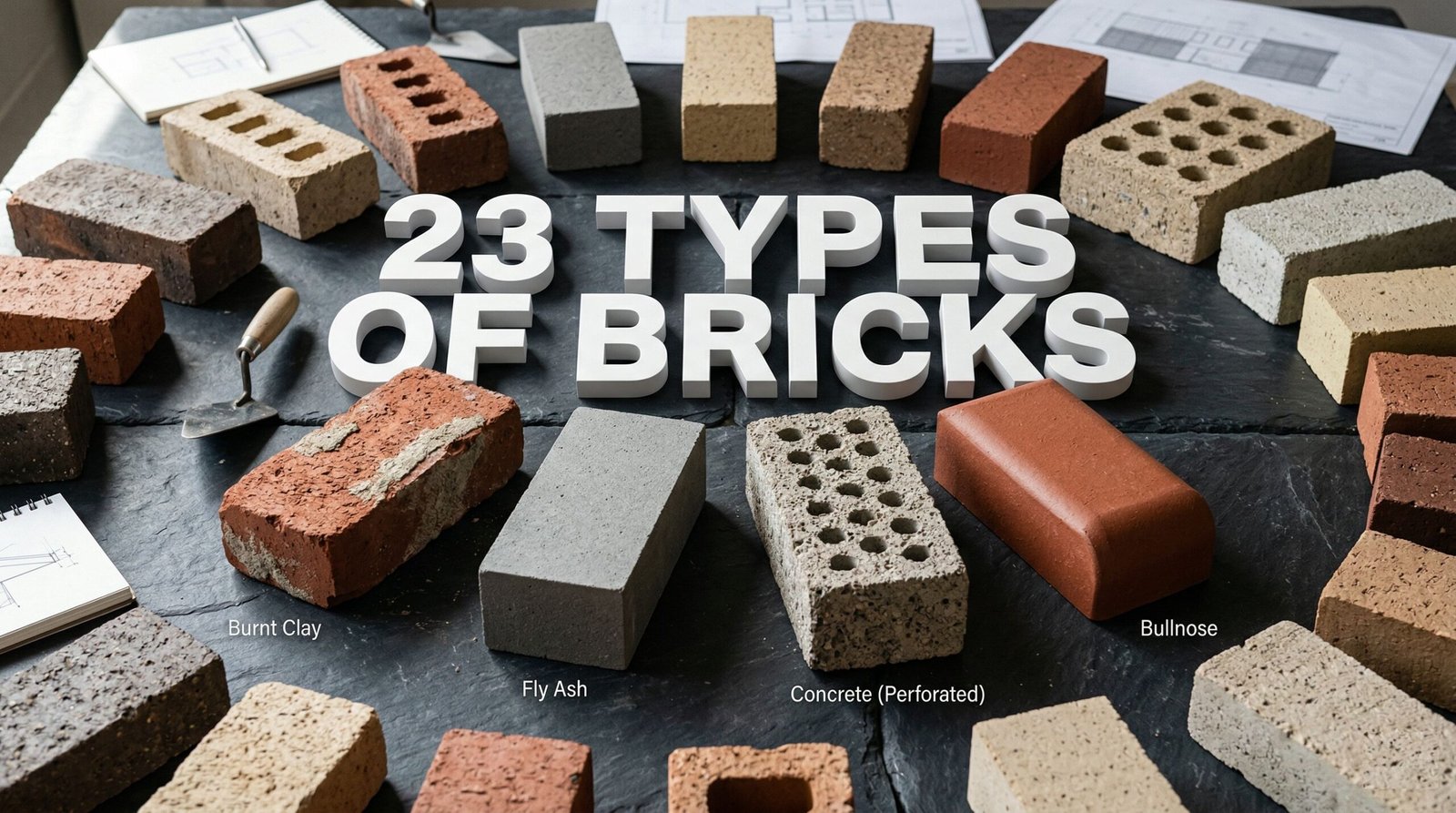
Here are 23 types of bricks that are important to know about. Each type is explained below with its key features, properties, and common uses.
1. Sun-Dried Clay Bricks
What They Are
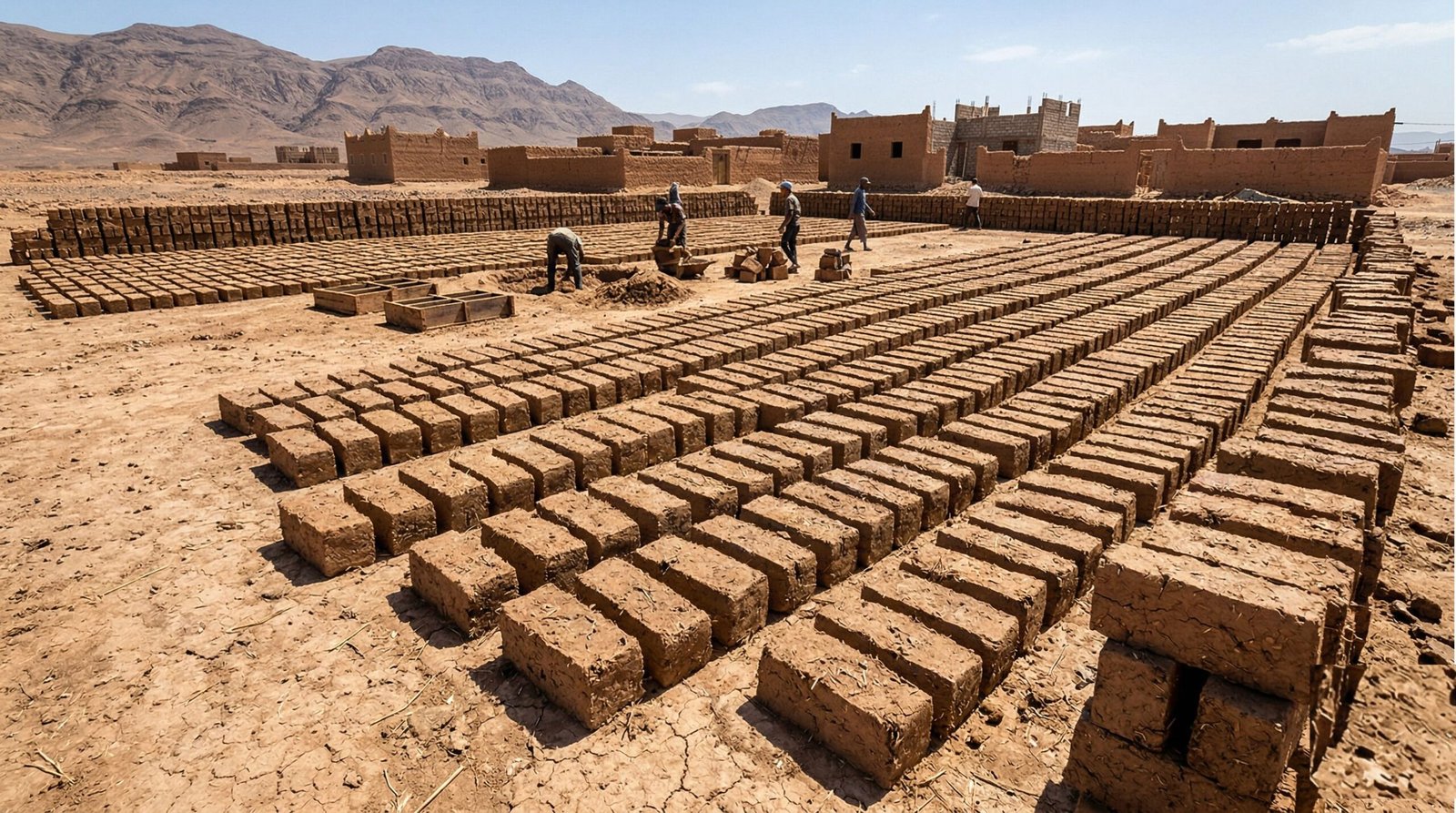
Sun-dried clay bricks are the oldest and simplest building blocks known to humanity. People often call them unburnt bricks or mud bricks. They are exactly what the name suggests. They are blocks of wet clay that harden by sitting in the hot sun.
How They Are Made
The process of making these is very easy. Workers take natural clay from the ground and mix it with water to create a thick mud. Sometimes, they mix in straw or animal dung to help hold the mud together. Then, they press this wet mud into wooden frames to give them a rectangular shape. Finally, they remove the frames and leave the blocks in the bright sunlight for several days or weeks until they dry completely.
Best Uses
Because these blocks never see a hot fire, they are not very strong. They cannot hold heavy weights, and they will melt if they stay in heavy rain. Therefore, you should only use them for temporary structures or in regions where it almost never rains. Builders in rural areas often use them to build small sheds or interior walls where water cannot reach them.
Advantages
- They cost almost nothing to make.
- You can make them yourself with local soil.
- They require no fuel to bake, helping the environment.
Disadvantages
- They have very low physical strength.
- Water will destroy them quickly.
- You cannot build tall walls with them.
2. Burnt Clay Bricks
What They Are
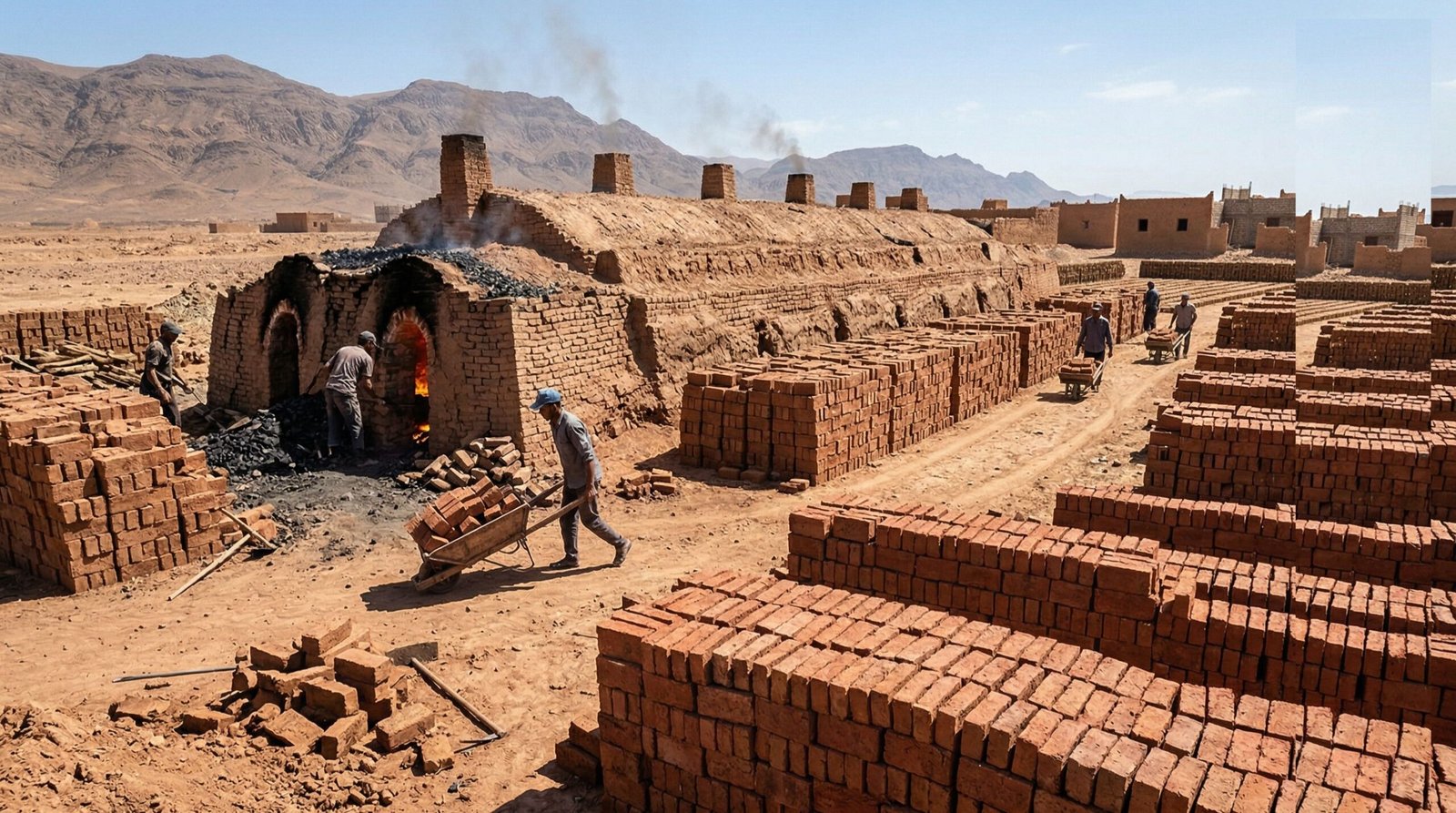
When you close your eyes and picture a standard red brick, you are thinking of a burnt clay brick. This is the most common building material in the world. They are the classic red blocks you see on old houses, schools, and walls in almost every city.
How They Are Made
The first steps are similar to the sun-dried version. Workers mix good quality clay with water and mold it into shapes. However, instead of just leaving them in the sun, workers place these blocks into massive ovens called kilns. The kilns heat the clay to extremely high temperatures. This intense fire changes the chemical structure of the clay, turning it into a very hard, durable stone.
Best Uses
You can use burnt clay bricks for almost anything. They are the top choice for building the main walls of a house, building boundary walls, and creating strong pillars. They handle rain, wind, and hot sun very well. Because they are so reliable, they are the standard choice for most general masonry work.
Advantages
- They are very strong and last a long time.
- They have a classic, beautiful red color.
- You can find them easily at any hardware store.
Disadvantages
- The quality can change depending on the local soil.
- They can absorb water if the baking process was poor.
- Making them requires a lot of fuel for the kilns.
3. Fly Ash Bricks
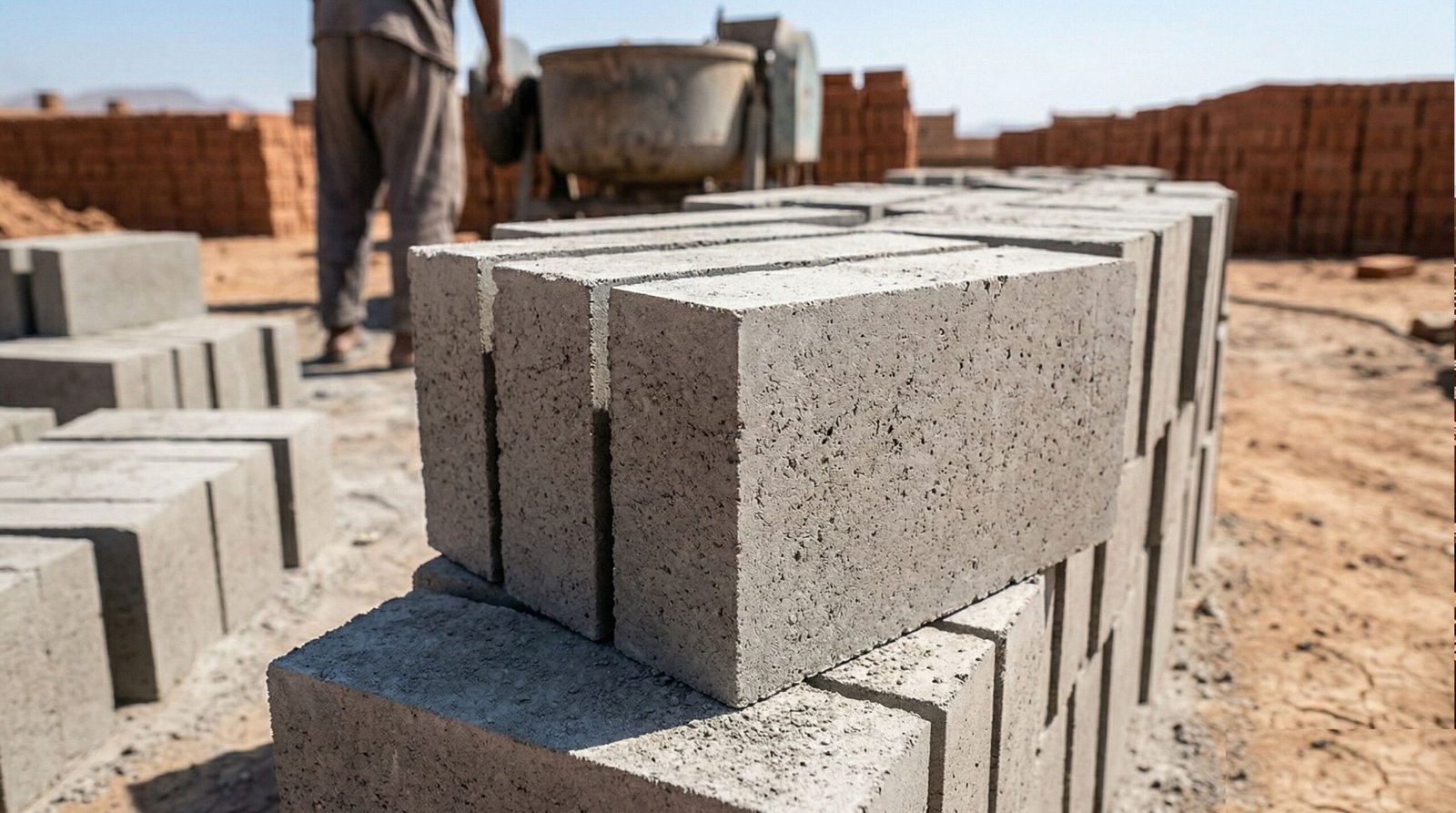
What They Are
Fly ash bricks are modern building blocks that come in a distinct grey color. They are becoming very popular all over the world because they are excellent for the environment and offer great strength. If you want a smooth, clean finish on your wall, these are a wonderful option.
How They Are Made
These blocks use a very clever recipe. Coal power plants produce a fine powder waste called fly ash. Instead of throwing this waste away, manufacturers mix the fly ash with water, sand, and cement. Machines press this mixture tightly into perfect rectangular shapes. They do not need to be baked in a fire. Instead, they cure and harden over time at normal temperatures.
Best Uses
Builders love using fly ash bricks for multi-story buildings because they weigh less than traditional clay options. This lower weight puts less stress on the building foundation. They are perfect for both outer walls and inner walls. Plastering over them is very easy because their sides are perfectly smooth and straight.
Advantages
- They recycle industrial waste, protecting nature.
- They absorb very little water.
- Their perfect shape means you need less mortar between them.
Disadvantages
- They are only available in grey color.
- They take longer to cure fully before you can use them.
- Some rural areas might not sell them.
4. Concrete Bricks
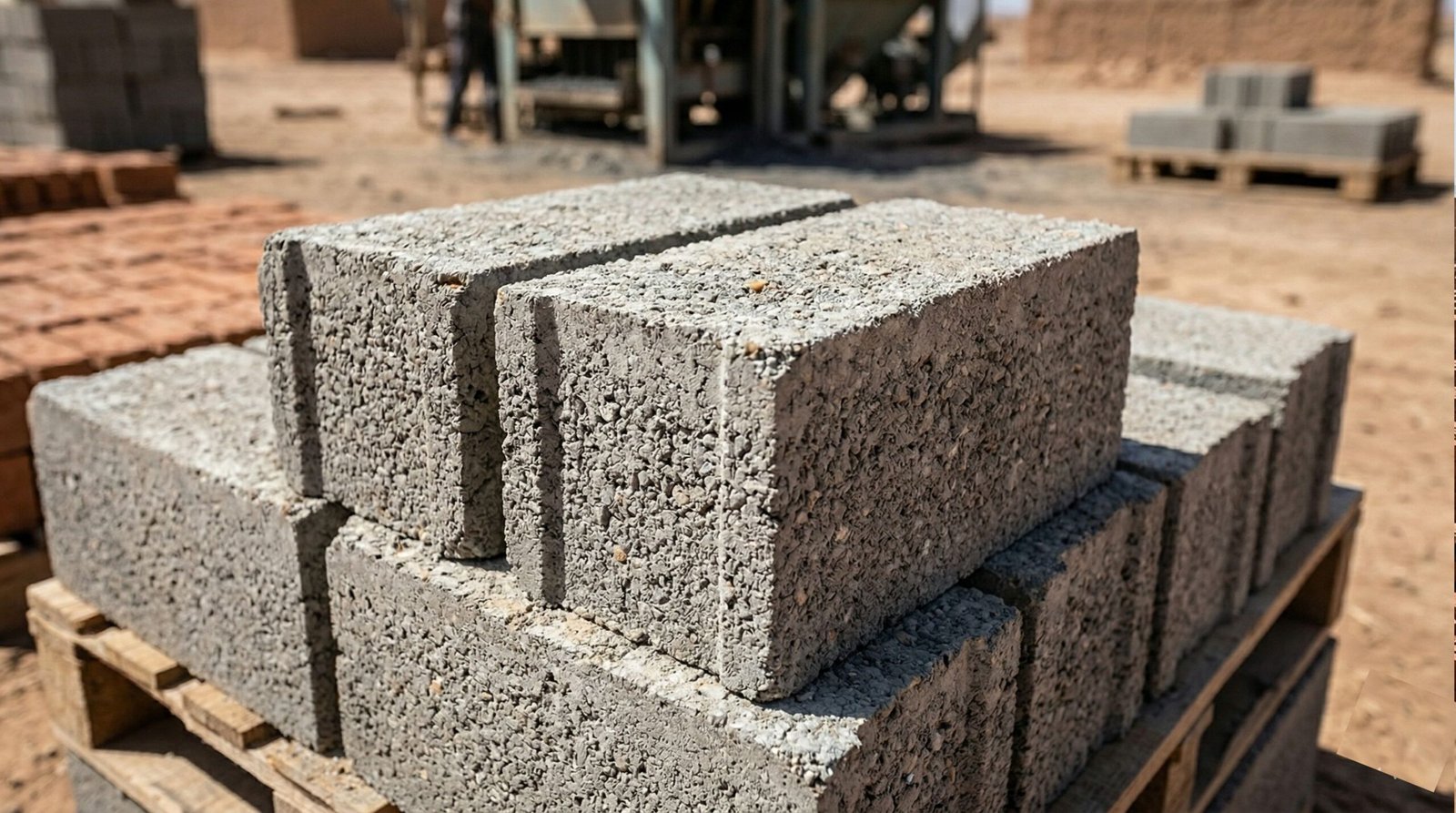
What They Are
Concrete bricks are incredibly tough building blocks made from the same material as sidewalks and building foundations. They look pale grey and feel very heavy in your hands. Many builders prefer them when strength is the most important factor for the project.
How They Are Made
Manufacturers mix solid cement, sand, small stones, and water together. They pour this heavy mixture into steel molds. Large machines vibrate the molds to remove all the air bubbles inside the wet mixture. Once the concrete dries and cures, the result is a solid, stone-like block that can carry massive amounts of weight.
Best Uses
You should use concrete bricks where you need absolute strength. They are ideal for hiding fences, building strong retaining walls to hold back dirt, and creating foundations for small buildings. They are also great for places that get a lot of noise because the heavy concrete blocks sound very well.
Advantages
- They provide amazing strength and durability.
- They block noise very well.
- They are highly resistant to fire and pests.
Disadvantages
- They are very heavy, making them hard to carry.
- They look plain and industrial.
- They can shrink slightly as they age, causing small cracks.
5. Sand-Lime Bricks
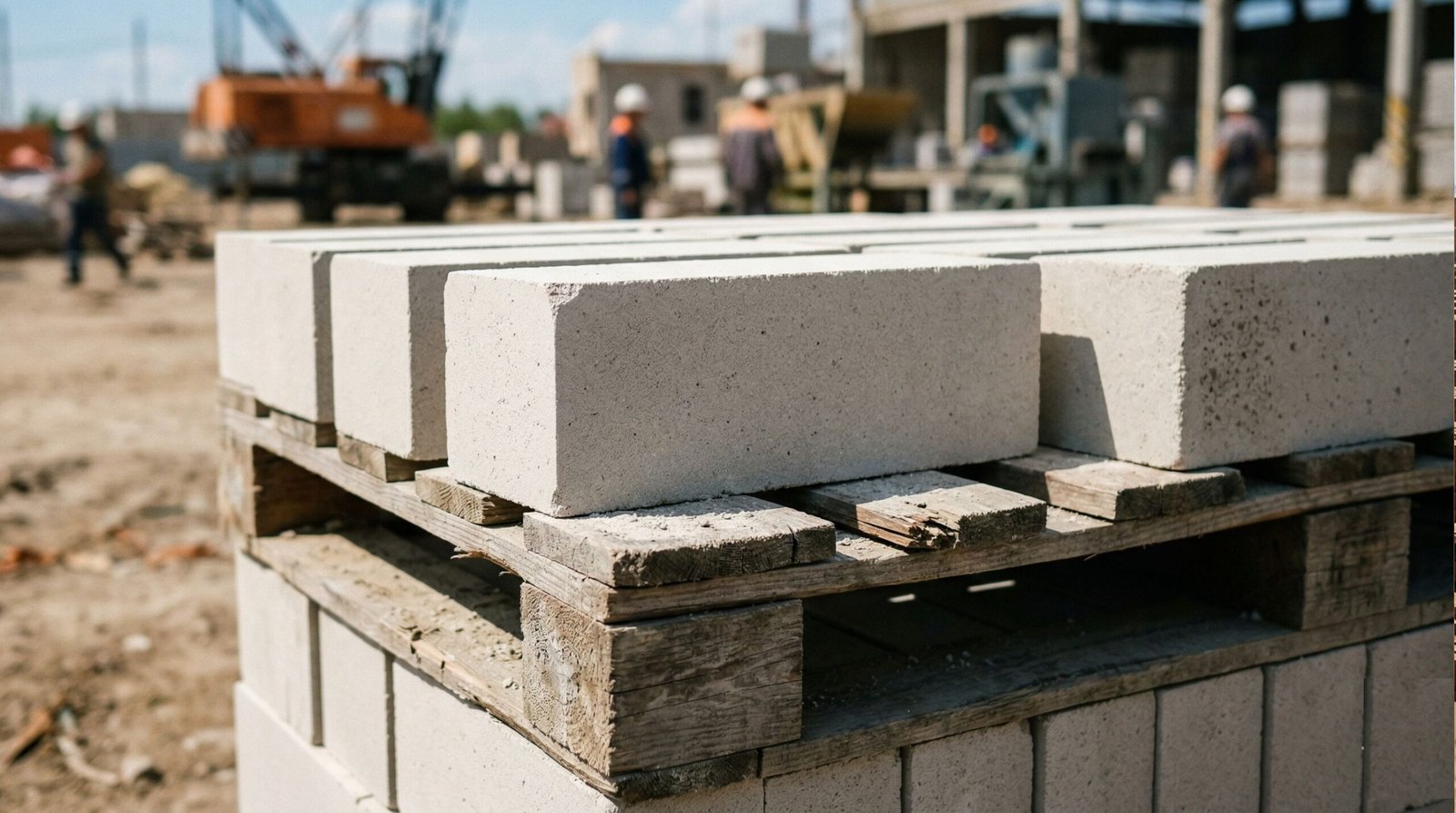
What They Are
Sand-lime bricks are special building blocks that are usually white or very light grey. People also call them calcium silicate bricks. They offer a very smooth finish and look much cleaner than rough clay options. Many architects choose them when they want the bare wall to look beautiful without adding paint.
How They Are Made
Instead of using clay, manufacturers mix sand, fly ash, and lime together. They add water to create a chemical reaction. Machines press this mixture into molds under very high pressure. Finally, the blocks go into an autoclave machine. This machine uses highly pressurized hot steam to bake and harden the blocks quickly. This process gives them a very uniform shape.
Best Uses
These are perfect for load-bearing walls in houses and commercial buildings. Because they have a beautiful, smooth texture, many people leave them exposed on the inside of a room for a modern look. They also carry sound poorly, so they make excellent acoustic walls between apartments to keep neighbors quiet.
Advantages
- They look beautiful without needing plaster or paint.
- They are very strong and hold weight well.
- Their perfect shape makes laying them very fast.
Disadvantages
- They do not resist fire as well as clay bricks.
- They can absorb water if left unsealed.
- They are often more expensive than common red options.
6. Engineering Bricks
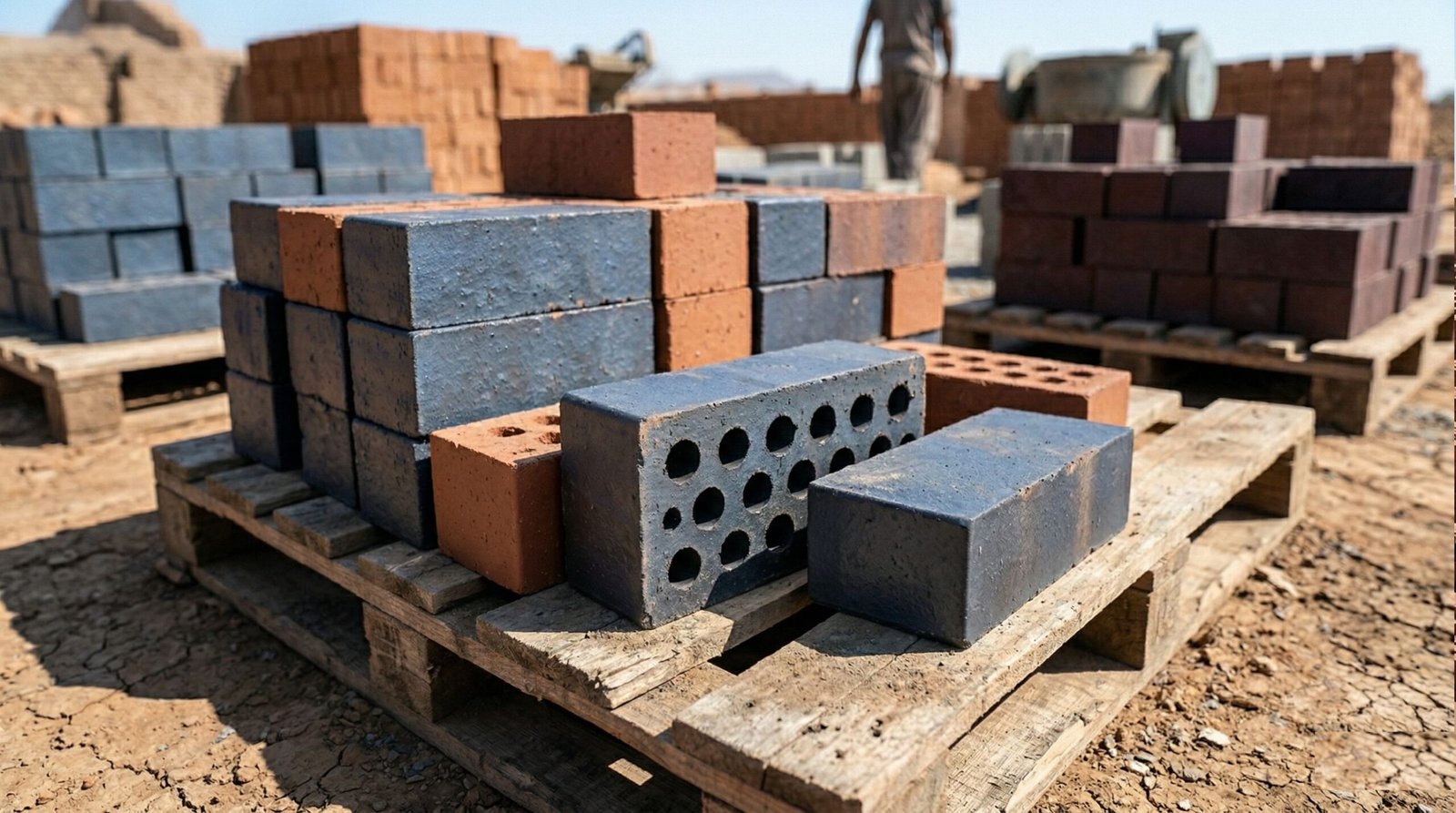
What They Are
Engineering bricks are the heavy duty workhorses of the construction world. They are incredibly dense, very heavy, and often darker in color like dark red or dark blue. When normal materials are not strong enough for a job, builders call for engineering bricks.
How They Are Made
Manufacturers use highly specific types of clay for these blocks. They bake them in kilns at temperatures much higher than regular bricks. This extreme heat causes the clay to melt slightly and turn into a glass-like substance. This process removes almost all the tiny air holes inside the brick, making it perfectly solid and totally waterproof.
Best Uses
You will not usually see these in normal house walls because they are too expensive. However, you will see them in underground tunnels, city sewers, damp basements, and at the bottom of walls touching wet soil. They are perfect for places where water and heavy pressure would destroy normal building materials.
Advantages
- They have massive structural strength.
- They are almost completely waterproof.
- They resist chemicals and frost damage perfectly.
Disadvantages
- They cost much more than standard options.
- They are not meant to look pretty.
- Their heavy weight makes them harder to work with.
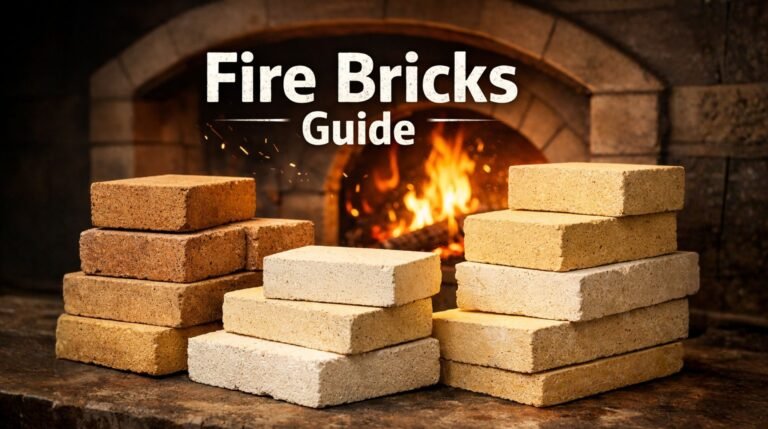
7. Firebricks
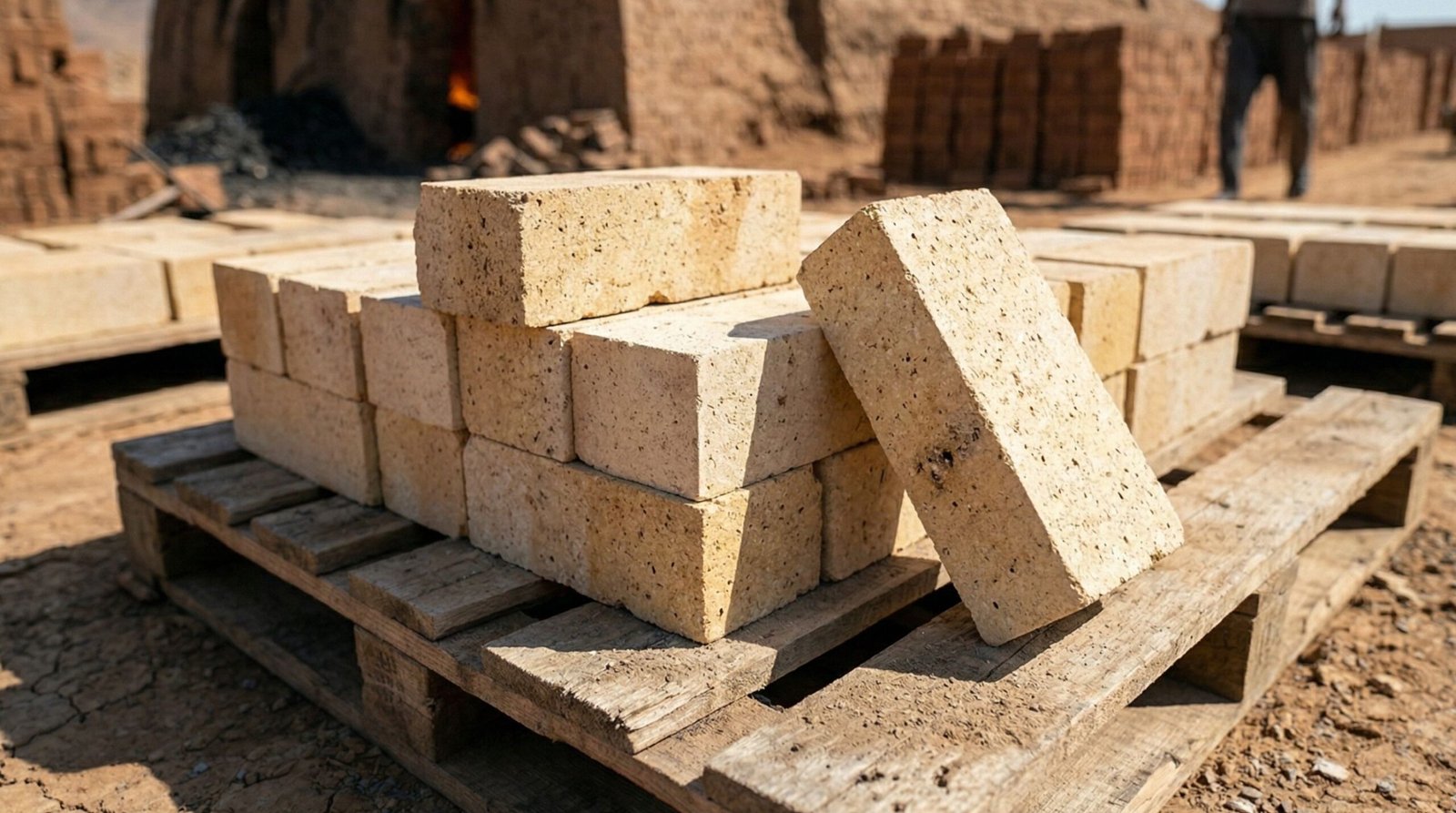
What They Are
Firebricks are special blocks designed strictly to survive extreme heat. People also call them refractory bricks. They usually have a yellowish or very light brown color. If you try to build a pizza oven with standard red bricks, the heat will crack them in a week. Firebricks, however, can handle the fire easily.
How They Are Made
They are made from a special earth called fireclay. This dirt contains a lot of aluminum oxide and silica. Manufacturers bake them at extremely high temperatures until they become almost like ceramic. This unique chemistry allows them to get incredibly hot without melting, breaking, or changing their shape.
Best Uses
These are the only blocks you should use to line the inside of a fireplace, a wood burning stove, a pizza oven, or an industrial furnace. You place them directly where the flames will touch. You do not use them to build normal walls because they are heavy, expensive, and completely unnecessary for regular room temperatures.
Advantages
- They can survive temperatures of thousands of degrees.
- They hold heat well and release it slowly.
- They do not crack under sudden temperature changes.
Disadvantages
- They are very expensive.
- They are heavy and require special heat resistant mortar.
- They are not designed for structural wall support.
8. Facing Bricks
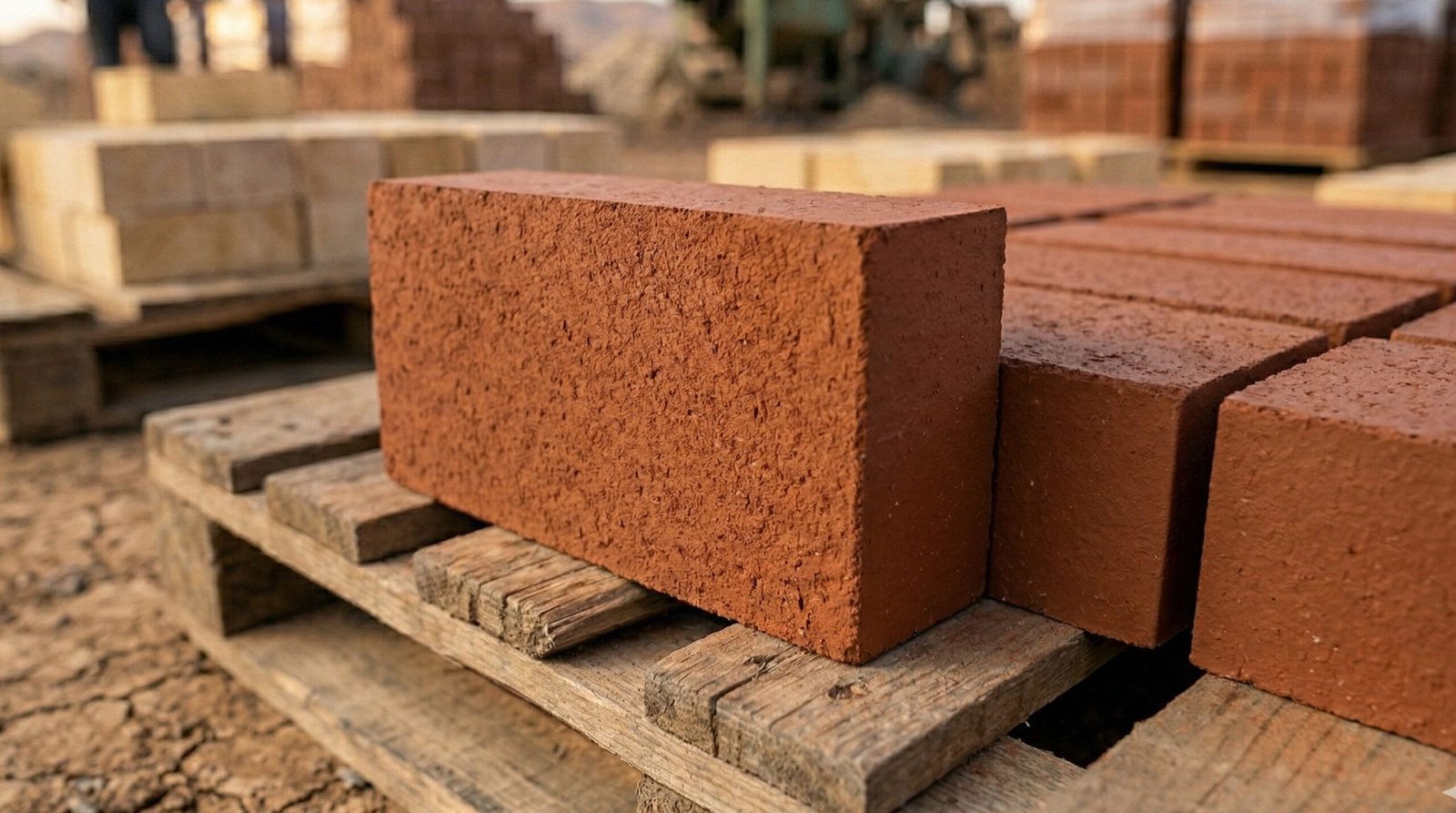
What They Are
Facing bricks are all about looking good. They are the blocks you see on the outside of a brick house. Builders specifically choose them because they have beautiful colors, interesting textures, and perfect shapes. They face the public, which is how they get their name.
How They Are Made
The manufacturing process is similar to common clay bricks, but the quality control is much higher. Manufacturers carefully select the clay to ensure the color is perfect. They often add special sands or textures to the outside before baking them. The baking process is controlled closely so every batch looks beautiful and matches perfectly.
Best Uses
You use these on the visible exterior walls of homes and commercial buildings. When a builder makes a double thick wall, they will use cheap, ugly blocks on the inside and these beautiful facing bricks on the outside. They give the building its final personality and charm.
Advantages
- They look fantastic and increase the value of your home.
- They come in hundreds of colors and textures.
- They are treated to resist weather and maintain color.
Disadvantages
- They cost more than common structural options.
- You still need cheaper blocks behind them for thick walls.
- You must keep them clean to maintain their beauty.
9. Common Bricks
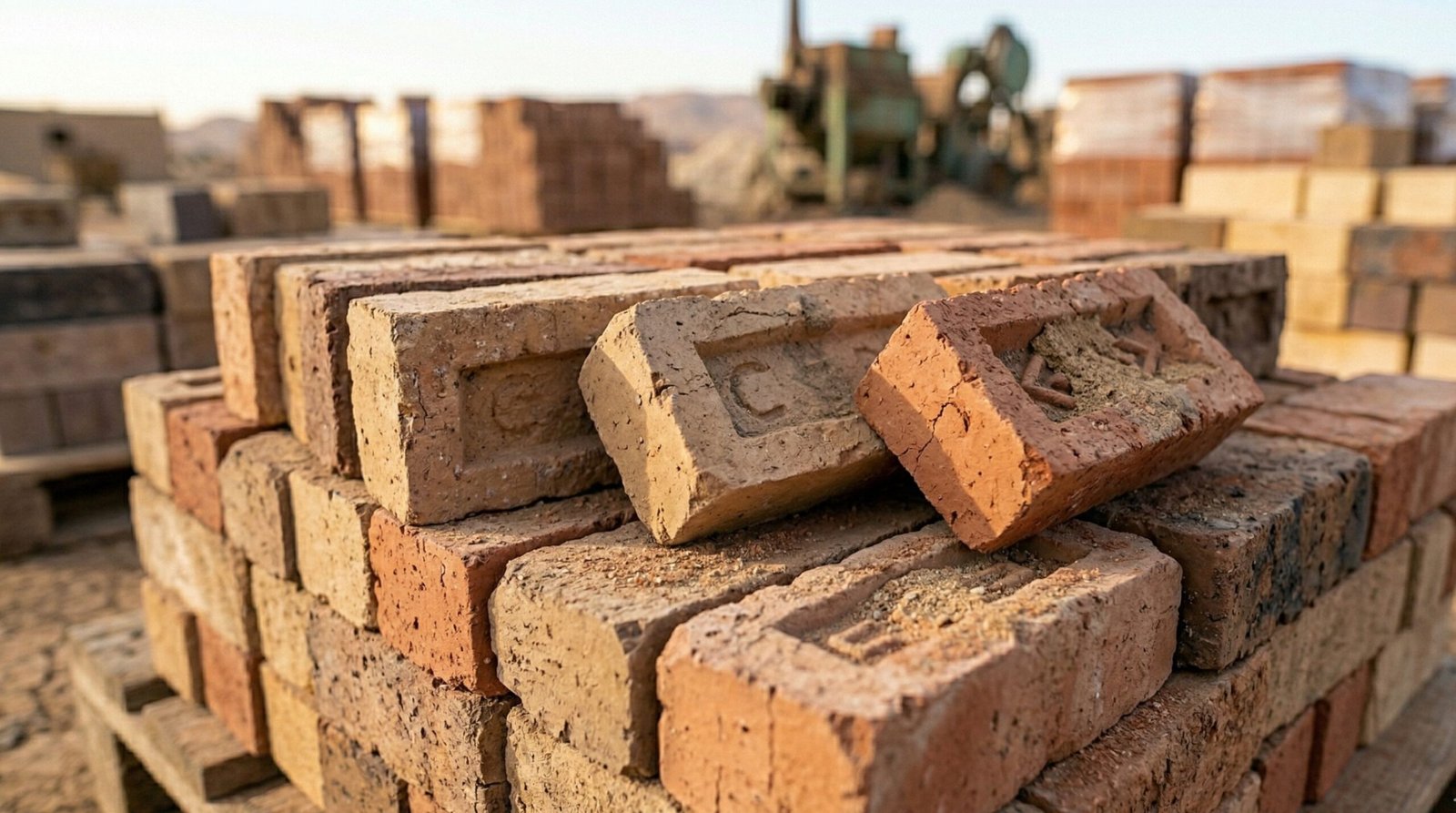
What They Are
Common bricks are the opposite of facing bricks. They are the standard, rough, unpolished building blocks. They do not have perfect edges, and their colors can look messy. However, they are cheap and strong, making them the backbone of most masonry construction.
How They Are Made
These are mass produced with very little care for how they look. Manufacturers dig up local clay, press it into molds quickly, and bake it. Because they do not spend time making them look perfect, they can produce millions of them very quickly and at a very low cost.
Best Uses
You use common bricks where nobody will ever see them. They are perfect for inner walls that you plan to cover with thick plaster or drywall. They are also used for the inner layer of an exterior wall. Because they are hidden, their rough appearance does not matter at all.
Advantages
- They are very affordable and easy to find.
- They provide excellent structural strength.
- The rough surface helps plaster stick to them perfectly.
Disadvantages
- They look too rough to leave exposed.
- Their sizes can vary slightly in the same batch.
- They might absorb water if not covered properly.
10. Veneer Bricks
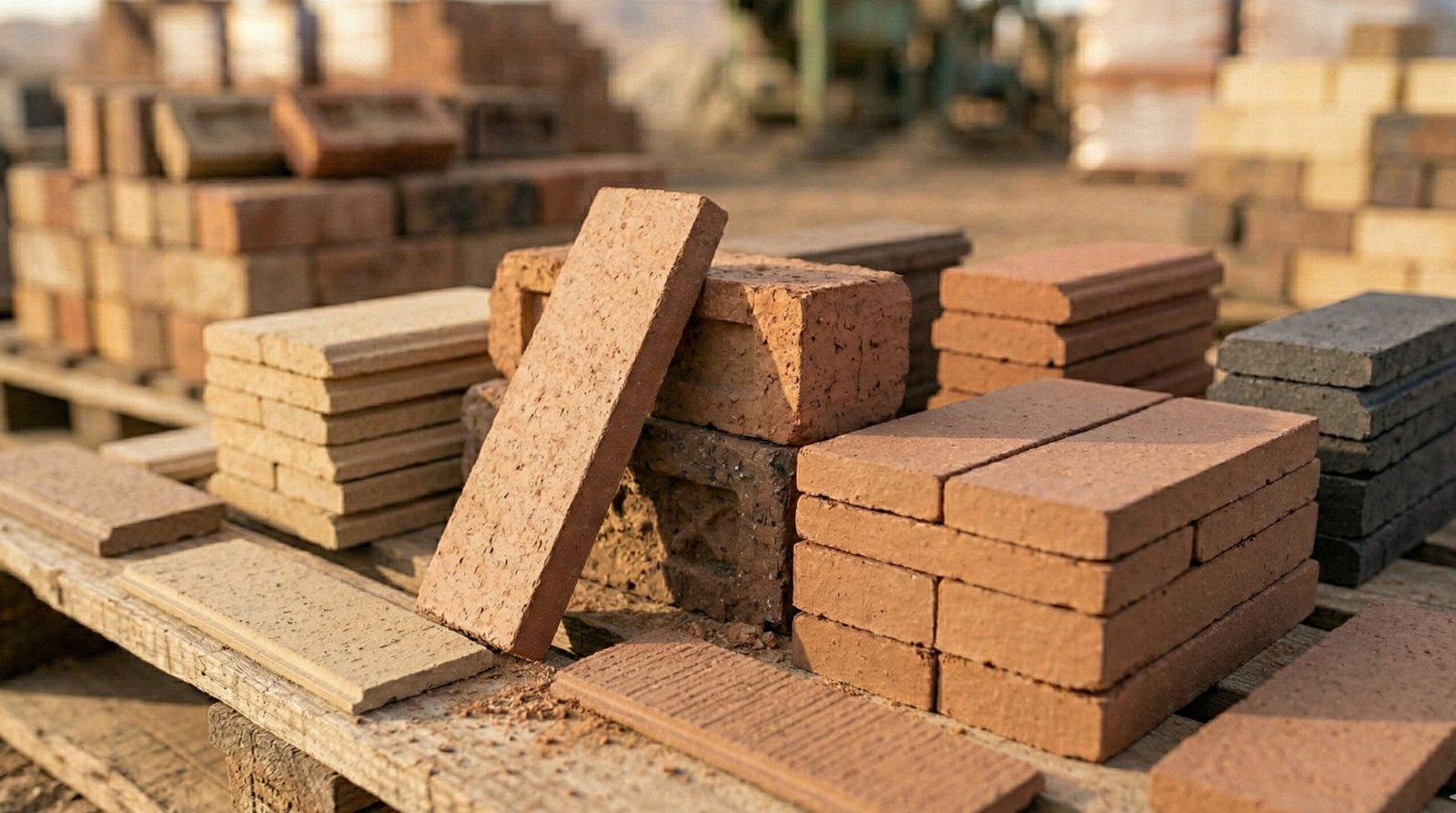
What They Are
Veneer bricks are not full sized building blocks. Instead, they are very thin slices of material that look exactly like the real thing. Think of them like tiles for your wall. They give you the beautiful look of masonry without the heavy weight or thick size.
How They Are Made
Sometimes manufacturers simply take a real clay block and slice the front face off with a large wet saw. Other times, they pour lightweight cement and color pigments into thin rubber molds to create artificial slices that look identical to clay. Because they are thin, they use much less raw material.
Best Uses
These are perfect for remodeling the inside of your house. If you want a cool, exposed brick wall in your kitchen or living room but you have wooden drywall framing, you use veneer. You just stick them to the wall with strong glue or thin mortar. You never use them to hold up a roof or support weight.
Advantages
- They are very light and easy to install anywhere.
- They do not require a strong concrete foundation.
- They look exactly like solid masonry.
Disadvantages
- They offer zero structural support to the building.
- They can be expensive per square foot.
- They can fall off if the glue fails.
11. Hollow Bricks (Cellular Bricks)
What They Are
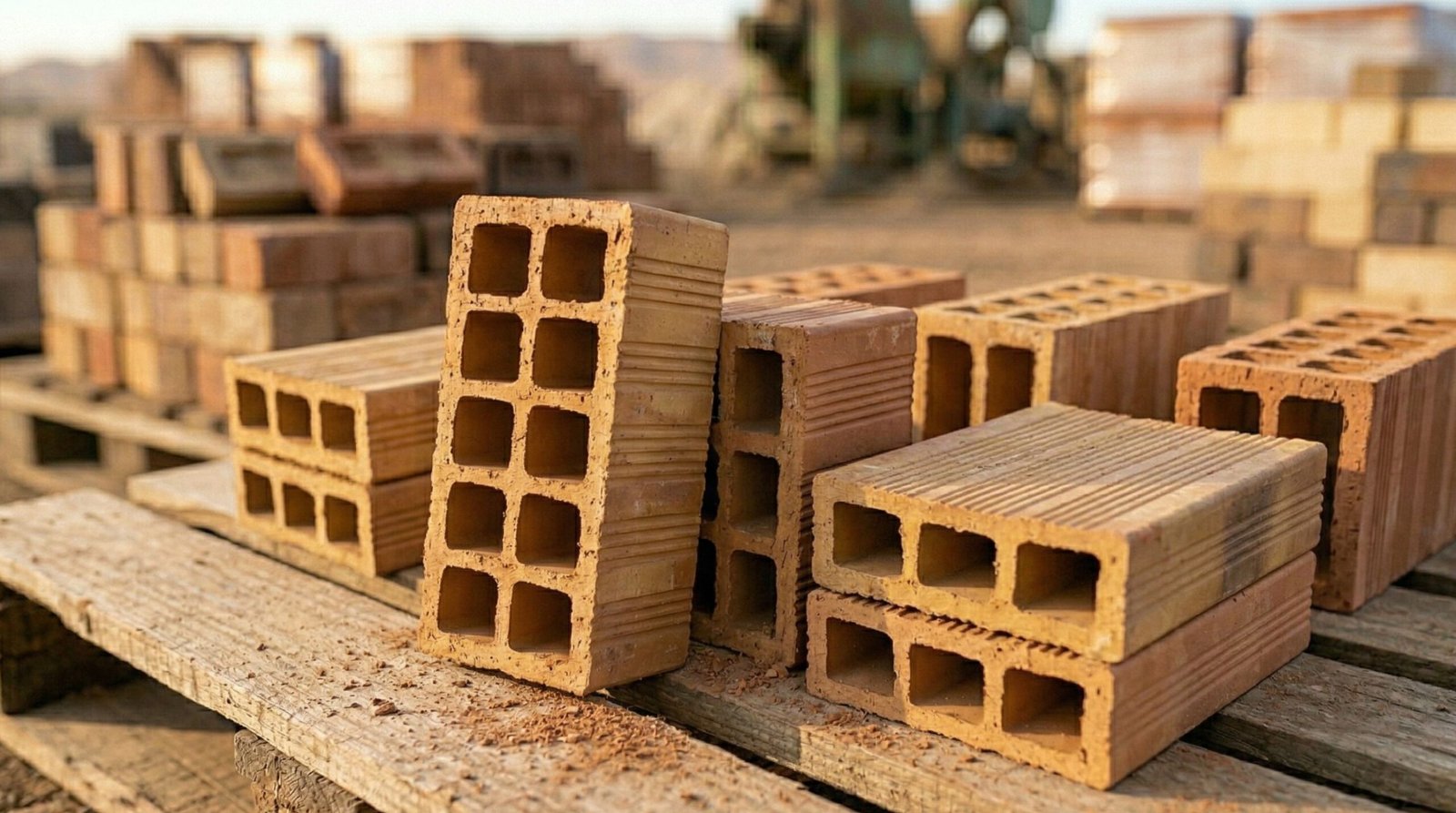
Hollow bricks, sometimes called cellular bricks, have large empty spaces or holes running completely through them. These holes make up a large portion of the block. They look very different from solid blocks, and these holes serve several very important purposes in modern construction.
How They Are Made
Machines push wet clay or concrete through a special metal plate that has solid pegs in it. The material flows around the pegs, creating the long holes. Then, a wire cuts the long tube of material into individual blocks. Finally, they bake them in an oven. The holes allow the heat to bake the clay from the inside and the outside at the same time.
Best Uses
Builders use these to build partition walls inside large office buildings or homes. Because they are mostly air, they are very light. This means a tall building does not have to carry as much weight. Furthermore, the air inside the holes acts as a blanket, keeping the building warm in winter and cool in summer.
Advantages
- They are lightweight and easy for workers to lift.
- They provide excellent heat and sound insulation.
- You can run electrical wires straight through the holes.
Disadvantages
- They cannot hold as much heavy weight as solid options.
- You cannot easily drill into them to hang heavy shelves.
- They are fragile and can break during transport.
12. Perforated Bricks
What They Are
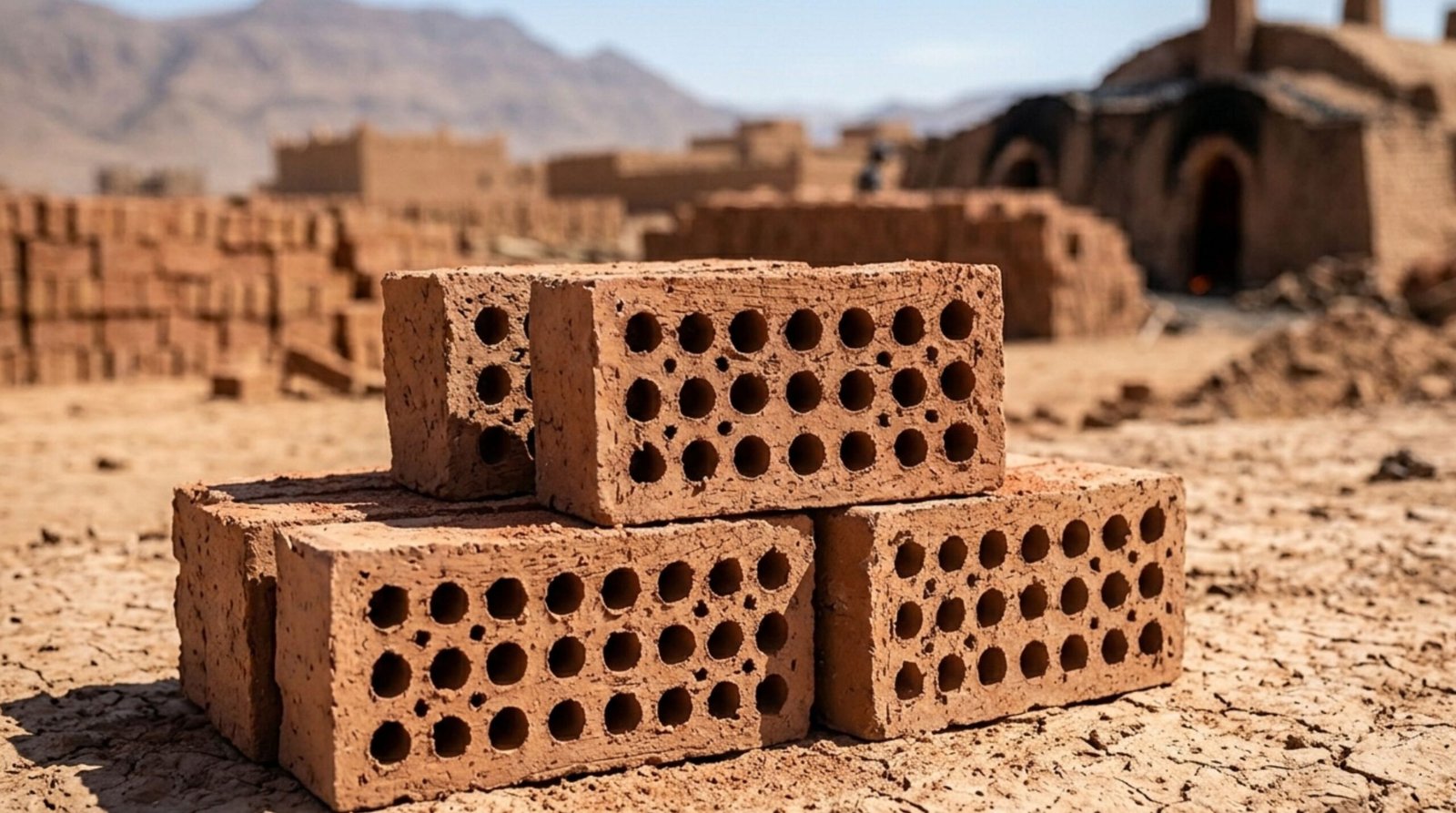
Perforated bricks are very similar to hollow ones, but instead of a few massive holes, they have many small, cylindrical holes running through them. They offer a middle ground between a completely solid block and a lightweight hollow block.
How They Are Made
The manufacturing process uses a machine that punches many tiny holes into the wet clay before it goes into the kiln. Just like the hollow versions, these tiny holes help the block dry faster and bake more evenly, which reduces the chance of the block cracking in the intense fire.
Best Uses
These are great for building multi story houses. The small holes provide a very clever benefit. When the mason spreads wet mortar on top of the block, the mortar sinks down into the little holes. When the mortar dries, it creates tiny concrete fingers that lock the blocks together incredibly tightly. This makes the wall very strong against heavy winds or slight earth movements.
Advantages
- They lock together with mortar much better than solid options.
- They are lighter than standard solid clay.
- They bake very evenly, reducing waste during manufacturing.
Disadvantages
- They are still not as strong as completely solid heavy blocks.
- Water can get trapped in the holes if they are exposed to rain.
- They require slightly more mortar to fill the top holes.
13. Paving Bricks
What They Are
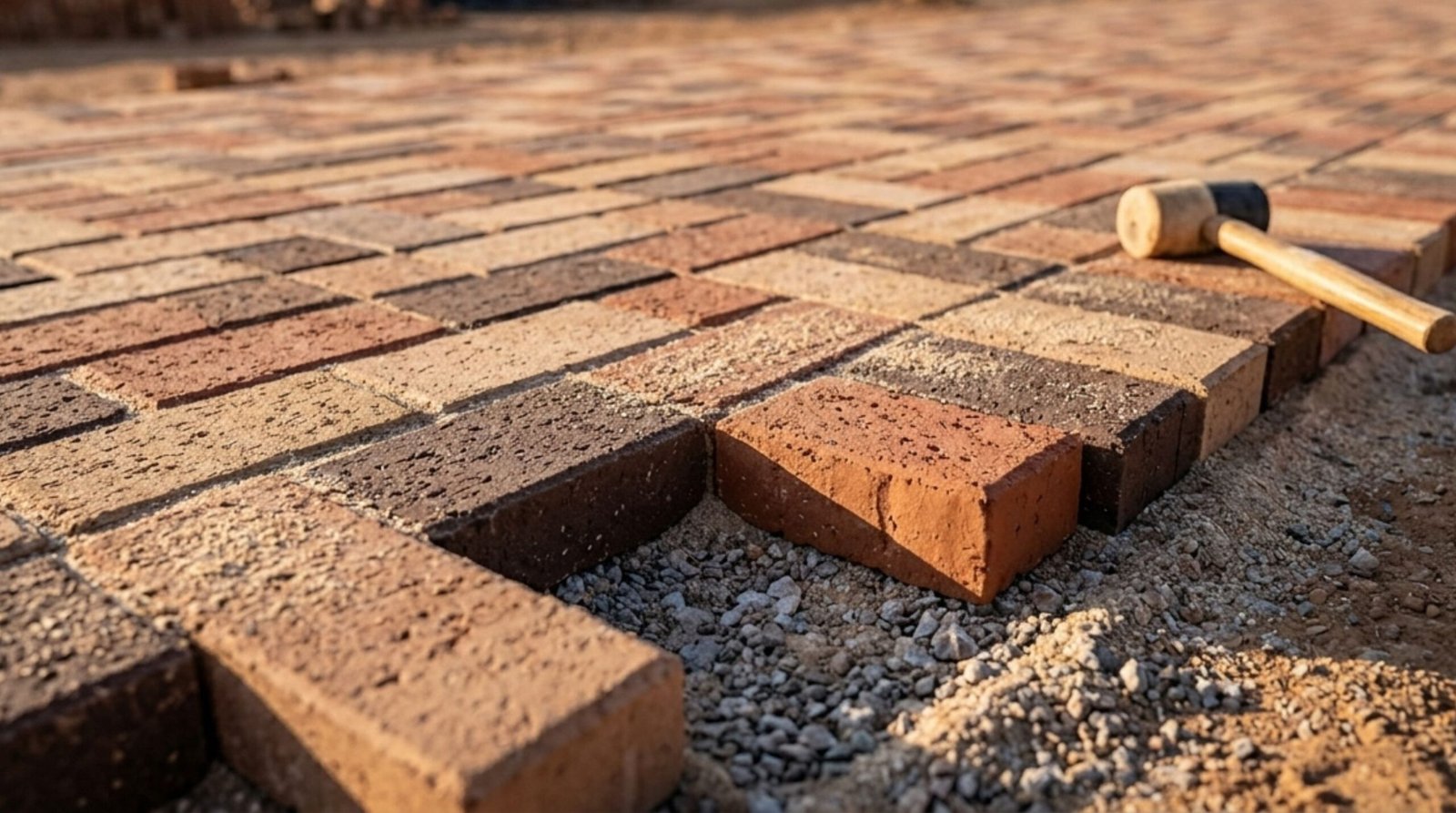
Paving bricks are meant for walking and driving, not for building walls up into the sky. They are the blocks you see on beautiful garden paths, driveways, and city sidewalks. They must survive constant scraping from shoes and heavy pressure from car tires.
How They Are Made
Manufacturers use specific clay or concrete mixtures designed strictly for toughness. They bake paving bricks at high temperatures to make them dense. Most importantly, they make sure the surface of the block is completely solid and slightly rough so people do not slip and fall when it rains.
Best Uses
You use these for any surface on the ground. Driveways, patios, garden paths, and pool edges are perfect places for them. You do not use mortar to stick them together. Instead, you lay them tight against each other on a bed of sand. If one breaks, you can easily pull it out and drop a new one in its place.
Advantages
- They handle foot traffic and heavy vehicles easily.
- They look much better than a plain concrete slab.
- Repairs are incredibly easy because you do not use mortar.
Disadvantages
- Weeds can grow in the cracks between them.
- The ground underneath must be perfectly flat and packed tightly.
- They can shift over time if the sand washes away.
14. Bullnose Bricks
What They Are
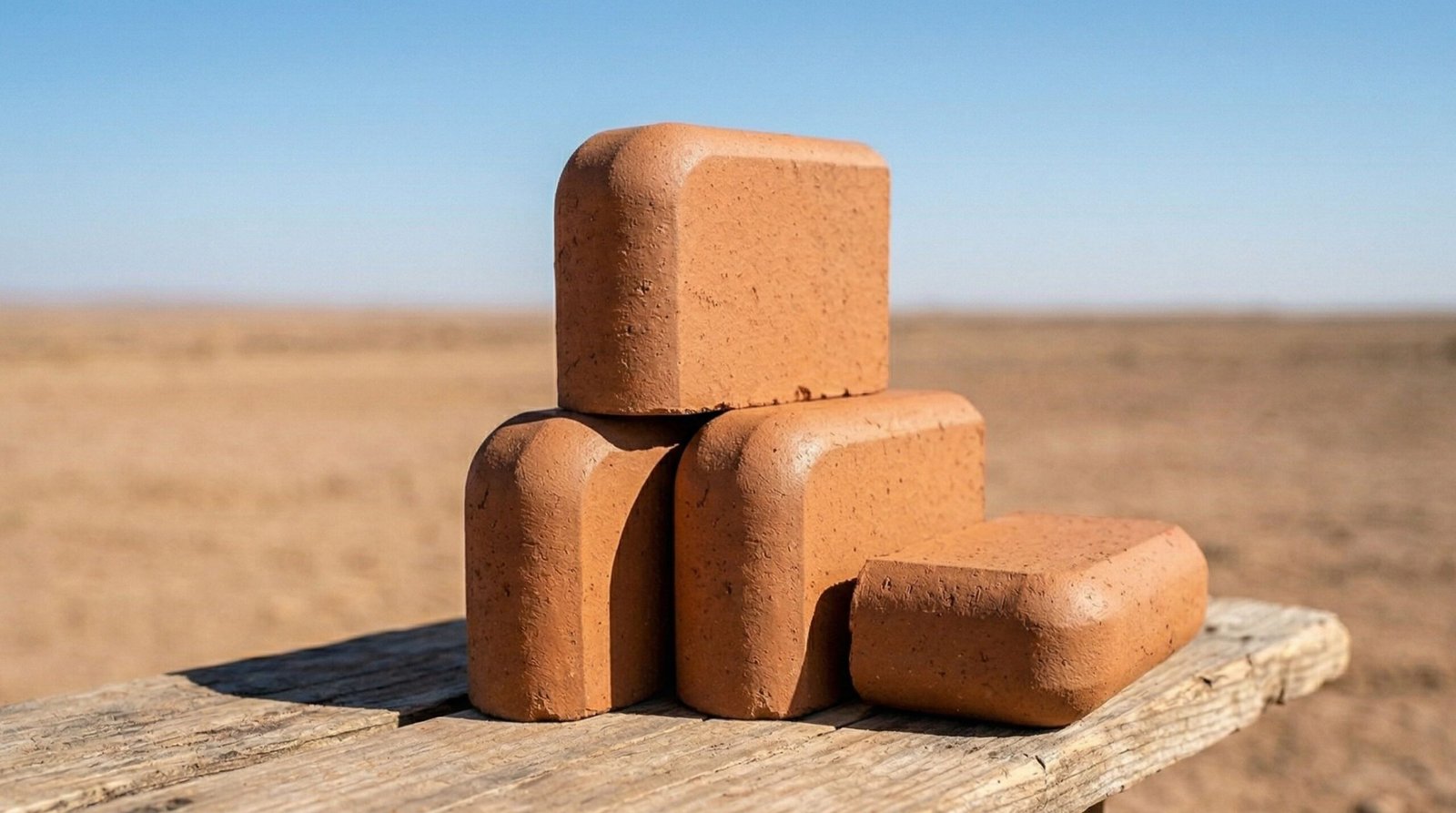
Bullnose bricks are specialty blocks that have one perfectly rounded edge instead of a sharp square corner. If you look at the block from the top, one side looks like a smooth curve. They get their name because the curve looks a bit like the rounded nose of a bull.
How They Are Made
During the molding process, the wooden or metal frames have a curved edge built right into them. The wet clay takes this curved shape before it goes into the kiln. They require precise molding because the curve must be perfectly smooth and uniform to look good on a finished wall.
Best Uses
Builders use these wherever they want a soft, safe edge. You will see them on the corners of buildings, the edges of windowsills, and the tops of low garden walls. They are excellent for places where children might run and hit the wall, because a rounded edge causes much less injury than a sharp corner.
Advantages
- They provide a beautiful, soft look to corners.
- They are safer if someone bumps into the wall.
- Water flows over the rounded edge easily, preventing water damage.
Disadvantages
- They cost more because they are specialty items.
- You only need a few of them, so buying them can be annoying.
- Laying them perfectly straight requires a skilled mason.
15. Cownose Bricks
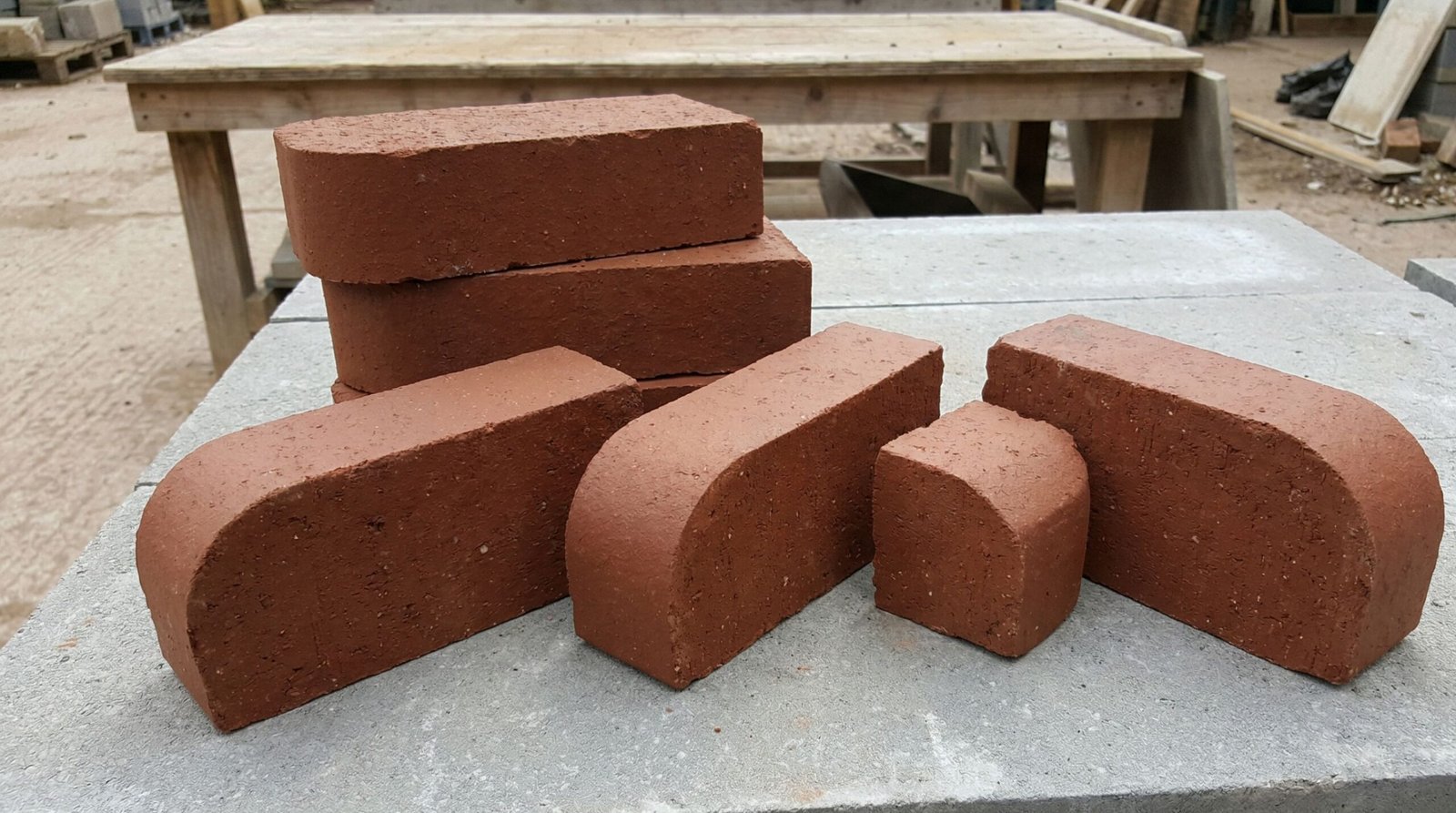
What They Are
If a bullnose brick has one rounded edge, a cownose brick has two rounded edges. The entire end of the block forms a complete half circle. It looks very smooth and decorative. It is another special block used purely to make the final construction look elegant and finished.
How They Are Made
Just like the bullnose, the molds are shaped to round off both sides of one end. Because both sides are rounded, the manufacturer must be very careful not to damage the soft curves while moving the wet clay into the hot baking kilns.
Best Uses
You use these on top of a single width wall. If you have a thin brick fence in your yard, placing sharp blocks on top looks unfinished. By placing cownose bricks on the very top row, the wall gets a beautifully rounded cap. It looks professional and prevents rain water from sitting flat on top of the wall.
Advantages
- They create a perfect, elegant finish for the top of thin walls.
- The double curve sheds rain water perfectly.
- They remove all sharp edges from the top of the structure.
Disadvantages
- They have very limited uses in construction.
- They are a specialty shape, meaning higher prices.
- They can be hard to find at a basic hardware store.
16. Channel Bricks
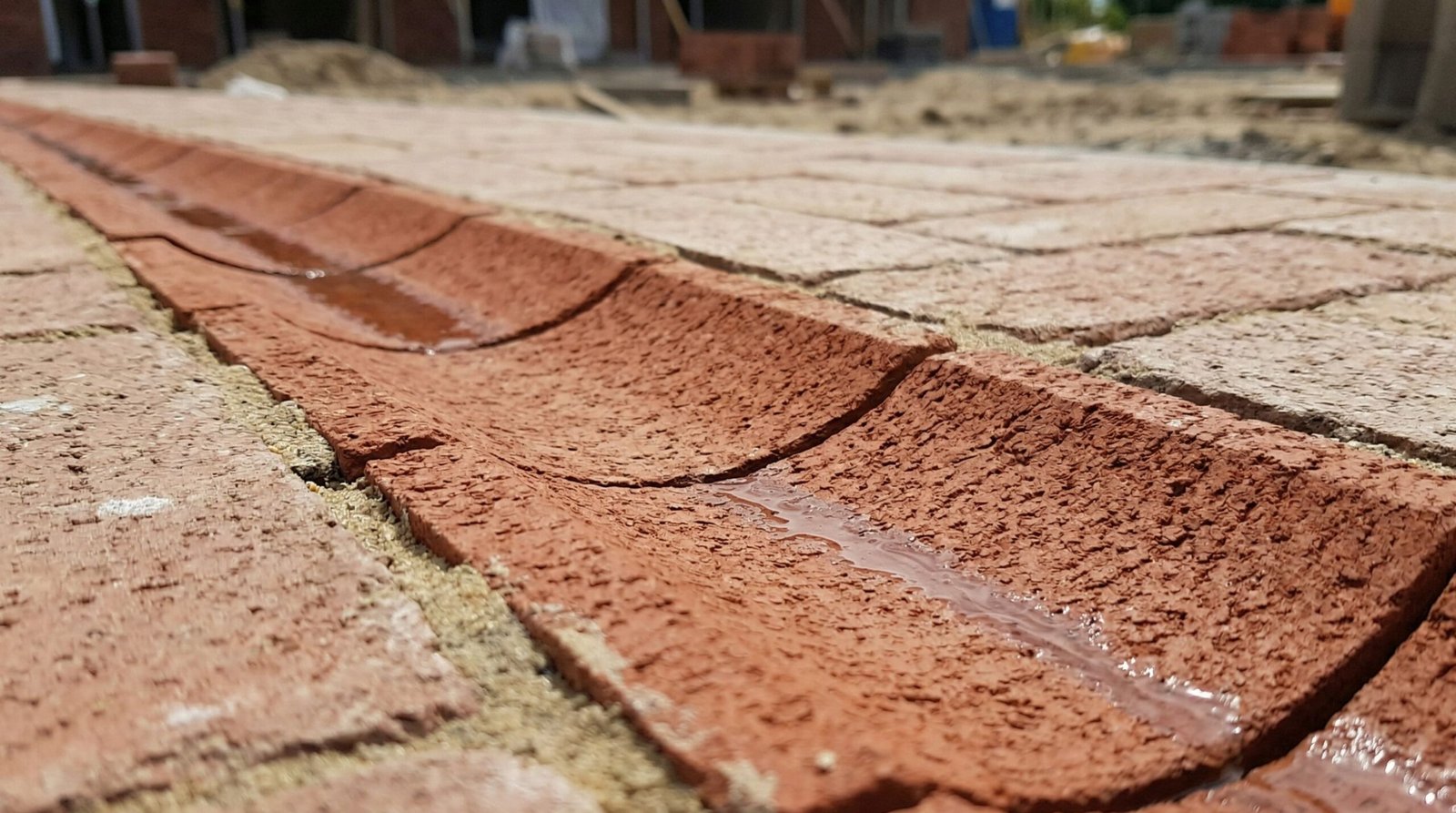
What They Are
Channel bricks are highly functional blocks that have a long groove, or trench, cut deep into their top surface. If you line several of them up end to end, the grooves connect to form a long, continuous mini canal. They look like a tiny riverbed made of baked clay.
How They Are Made
The manufacturing molds have a raised section in the center. When the clay fills the mold, the raised section leaves a deep trench behind. Because these will hold running water, manufacturers usually glaze them or bake them at very high temperatures so they become completely waterproof.
Best Uses
As you might guess, builders use these for drainage. You place them at the edges of streets, along the bottom of driveway slopes, or under water pipes. When it rains, the water falls into the channel and flows safely away from the house foundation. They are a crucial part of managing heavy rain.
Advantages
- They direct water away from important foundations perfectly.
- They look much nicer than cheap plastic drain pipes.
- They last for decades without breaking or rotting.
Disadvantages
- Leaves and dirt can clog the channel easily.
- You must install them with a perfect downward slope.
- They serve no purpose for building vertical walls.
17. Coping Bricks
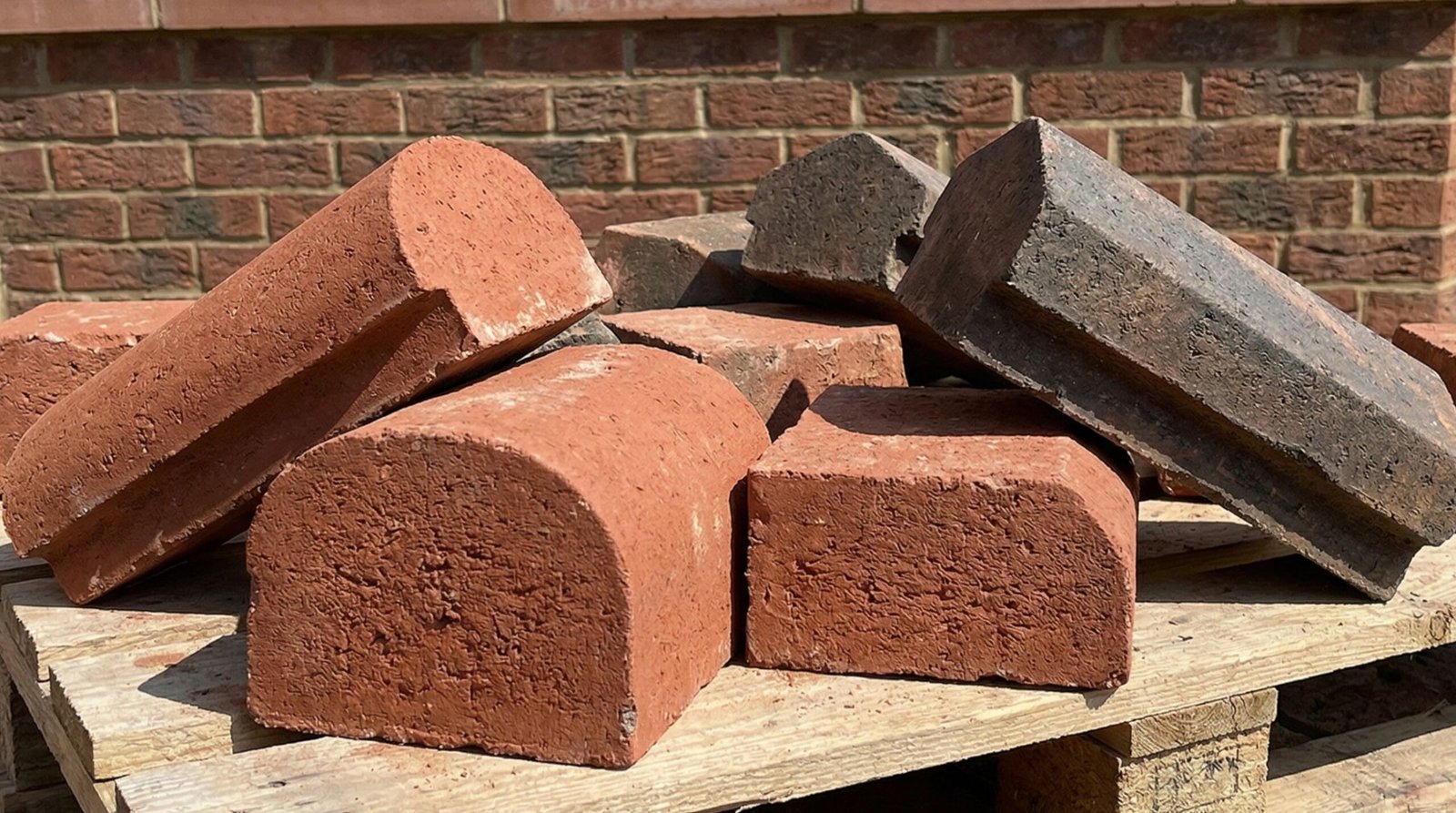
What They Are
Coping bricks are the hats for your wall. They sit on the very top row of an outdoor wall and usually have a slanted or triangular shape. They are wider than the wall itself, so they hang over the edges slightly. Their main job is to protect the wall beneath them from bad weather.
How They Are Made
These are molded into special triangular or sloped shapes. The overhang part usually has a tiny groove underneath called a drip edge. Manufacturers ensure these blocks are very dense and highly water resistant, as they will face the direct impact of heavy rain and snow every day of the year.
Best Uses
You must place these on the top of any freestanding outdoor wall. When it rains, the slanted top forces the water to run off immediately. Because they hang over the edge, the water drops straight down to the ground. This prevents water from soaking into the side of the wall and ruining the mortar joints.
Advantages
- They protect the main wall from severe water damage.
- They give the top of the wall a finished, grand appearance.
- The drip edge prevents dirty water from staining the wall face.
Disadvantages
- They require special measuring to ensure the overhang is even.
- They are heavy and must be mortared securely so they do not fall.
- They add extra cost to a simple wall project.
18. Curved Sector Bricks
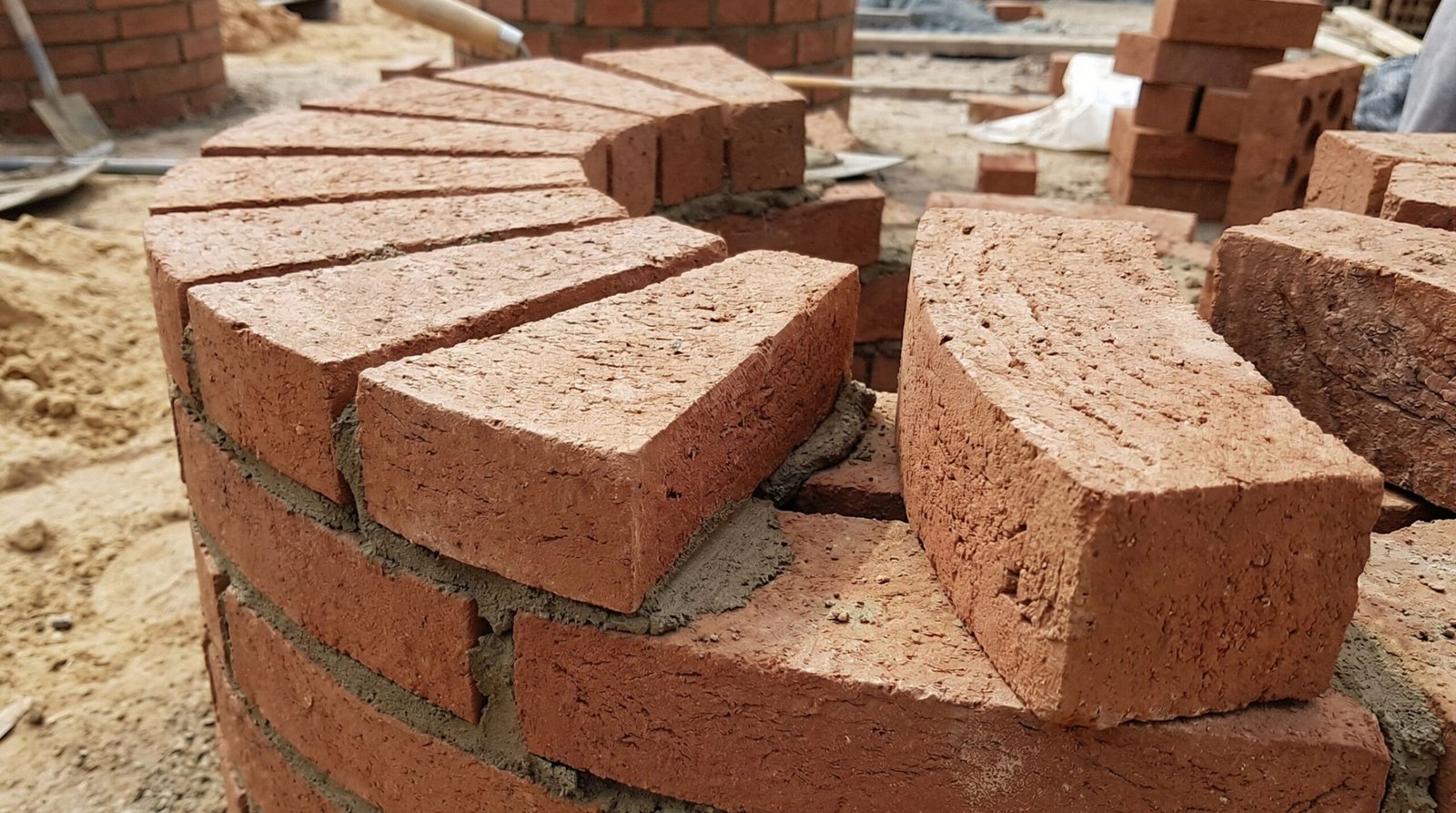
What They Are
Curved sector bricks are blocks that form a part of a circle. Instead of straight rectangles, the inner and outer faces are curved, while the sides point inward toward a center point. If you put enough of them together, they form a perfect, continuous ring.
How They Are Made
These require very specific geometry during the molding process. The manufacturer must calculate the exact curve required. For example, some are made to form a circle that is three feet wide, while others form a circle ten feet wide. The clay must hold this precise curve during the hot baking process.
Best Uses
Builders use these to build round structures. If you want to build a round water well, a tall factory chimney, or a beautiful circular pillar for your front porch, you use curved sector bricks. If you try to build a circle using straight blocks, the mortar joints become huge and weak. These special blocks solve that problem completely.
Advantages
- They make building perfect circles very easy and structurally sound.
- The mortar lines stay thin and even.
- They provide massive strength to round towers.
Disadvantages
- You must buy the exact curve size you need for your project.
- They are useless for standard straight walls.
- They require a highly skilled mason to lay them correctly.
19. Cant Bricks
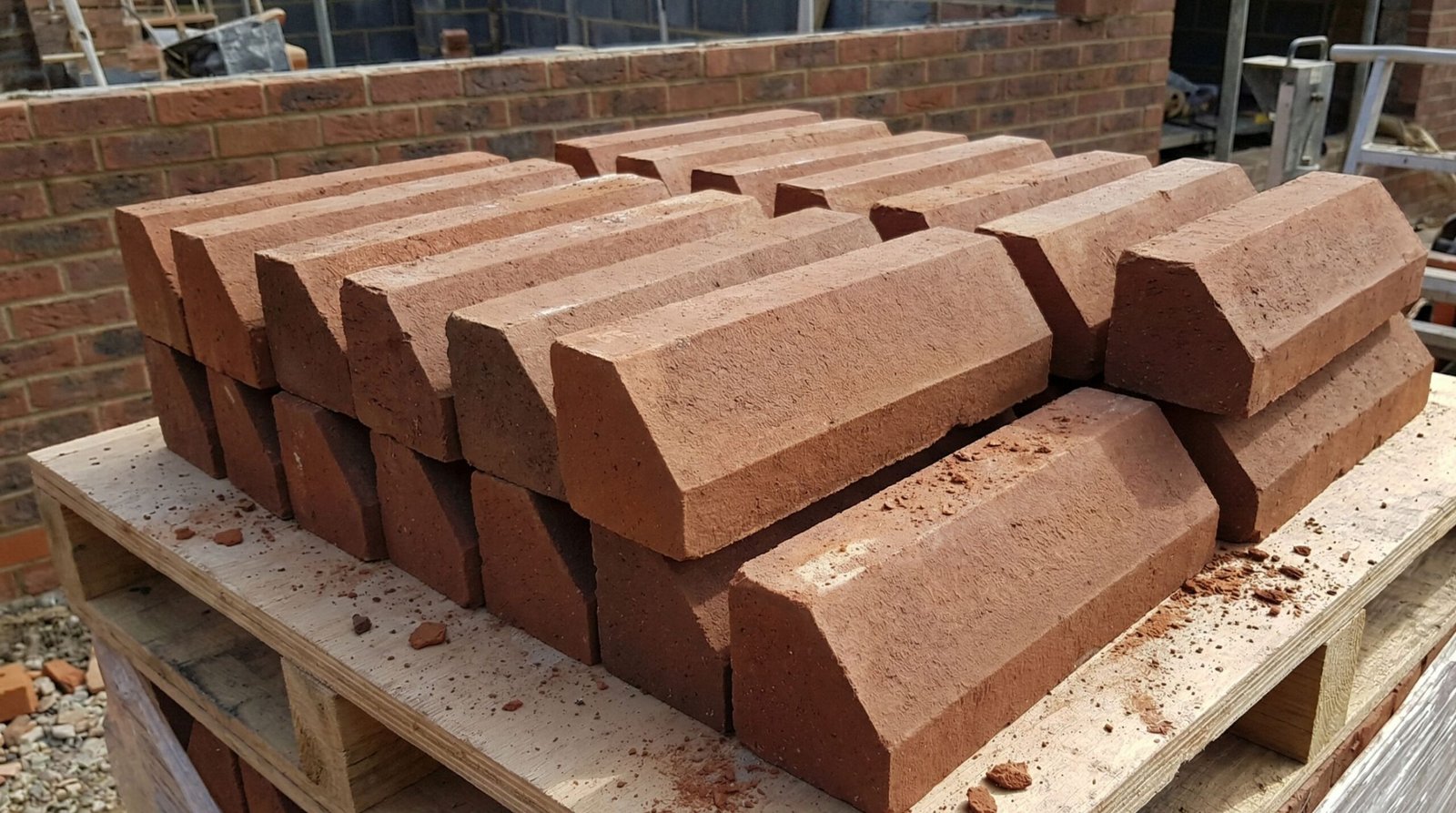
What They Are
Cant bricks look like someone took a standard rectangle and sliced one corner off at a sharp angle. This creates a flat, slanted surface where a sharp right angle would normally be. People often call this a chamfered edge. It provides a very geometric, modern look.
How They Are Made
The molds cut off the corner at exactly 45 degrees or 60 degrees. The slice must be perfectly flat and smooth. Because they are often used for decorative edges, manufacturers use high quality clay and bake them carefully to ensure the color matches the rest of the building perfectly.
Best Uses
You will often see these used around window frames and door frames. The slanted edge points inward toward the window, which helps direct sunlight into the room and allows rain to slide away from the window glass. They are also used on the corners of buildings to create a softer edge that is not fully rounded like a bullnose.
Advantages
- They create beautiful, angled shadows around windows.
- They direct water away from window and door openings.
- They give a building a highly customized, expensive look.
Disadvantages
- They require careful planning to make the corners meet perfectly.
- They are more expensive than regular square blocks.
- They are strictly decorative and do not add extra strength.
20. Squint Bricks
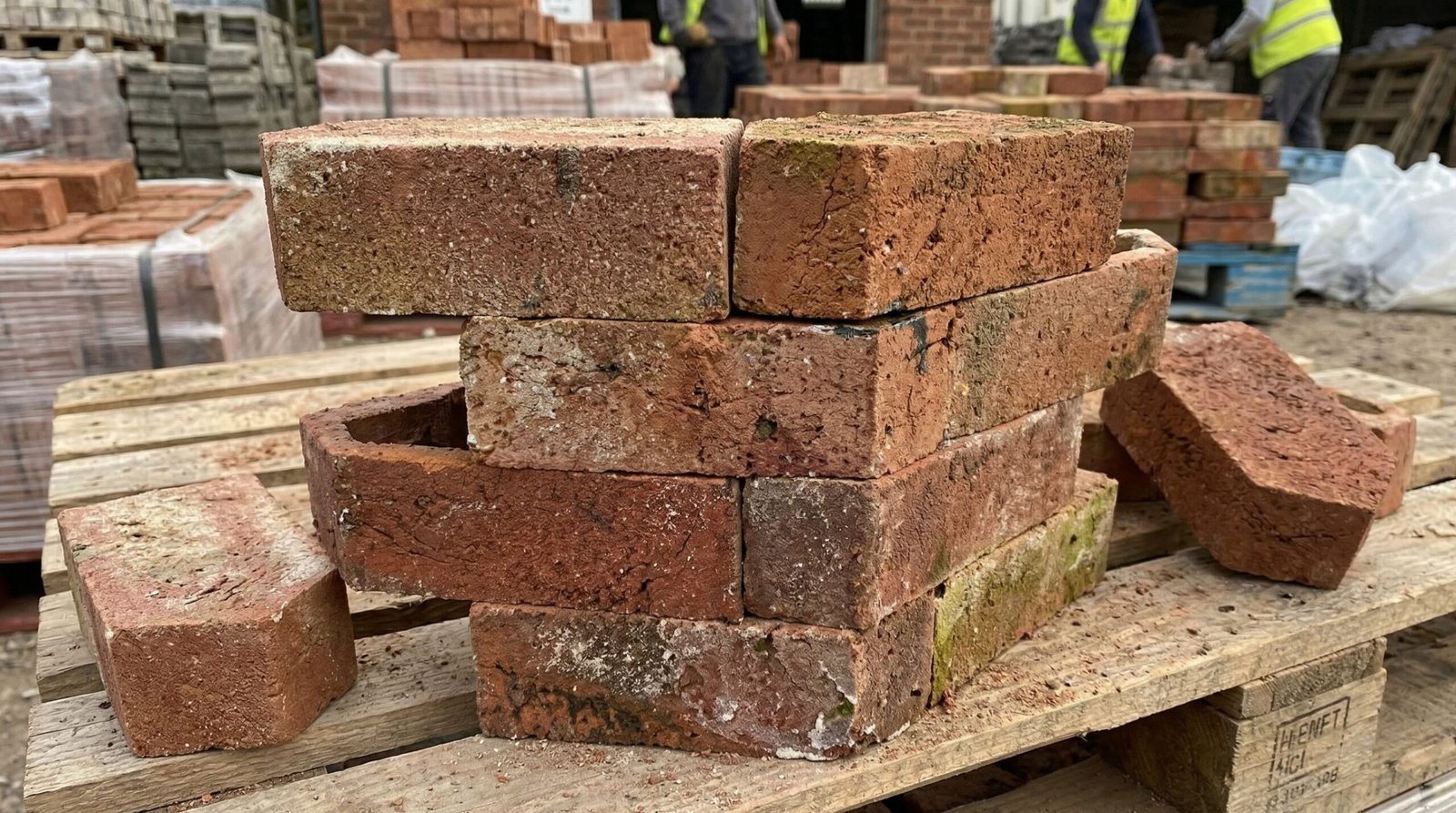
What They Are
Squint bricks are very unique building blocks designed for strange angles. Most house corners are 90 degrees. However, sometimes a building has a hexagon shape, or the property line forces the wall to turn at an unusual angle like 45 degrees or 60 degrees. Squint bricks are cut to fit these odd corners perfectly.
How They Are Made
These are molded in special shapes like triangles or diamonds. They allow two walls to connect solidly even if they do not form a standard square corner. Because unusual corners take a lot of wind stress, these blocks are baked very hard to ensure maximum strength.
Best Uses
You only use these when your building plan requires non square corners. For example, if you are building a bay window that sticks out from the house at an angle, you need squint bricks where the angled wall meets the flat wall. They prevent the builder from having to fill huge gaps with thick, weak mortar.
Advantages
- They make building unusual angles strong and secure.
- They keep the corner looking neat and professional.
- They prevent massive, ugly mortar joints at weird corners.
Disadvantages
- You have to special order the exact angle you need.
- They are difficult to place correctly without string lines.
- They are highly specialized and expensive.
21. Plinth Bricks
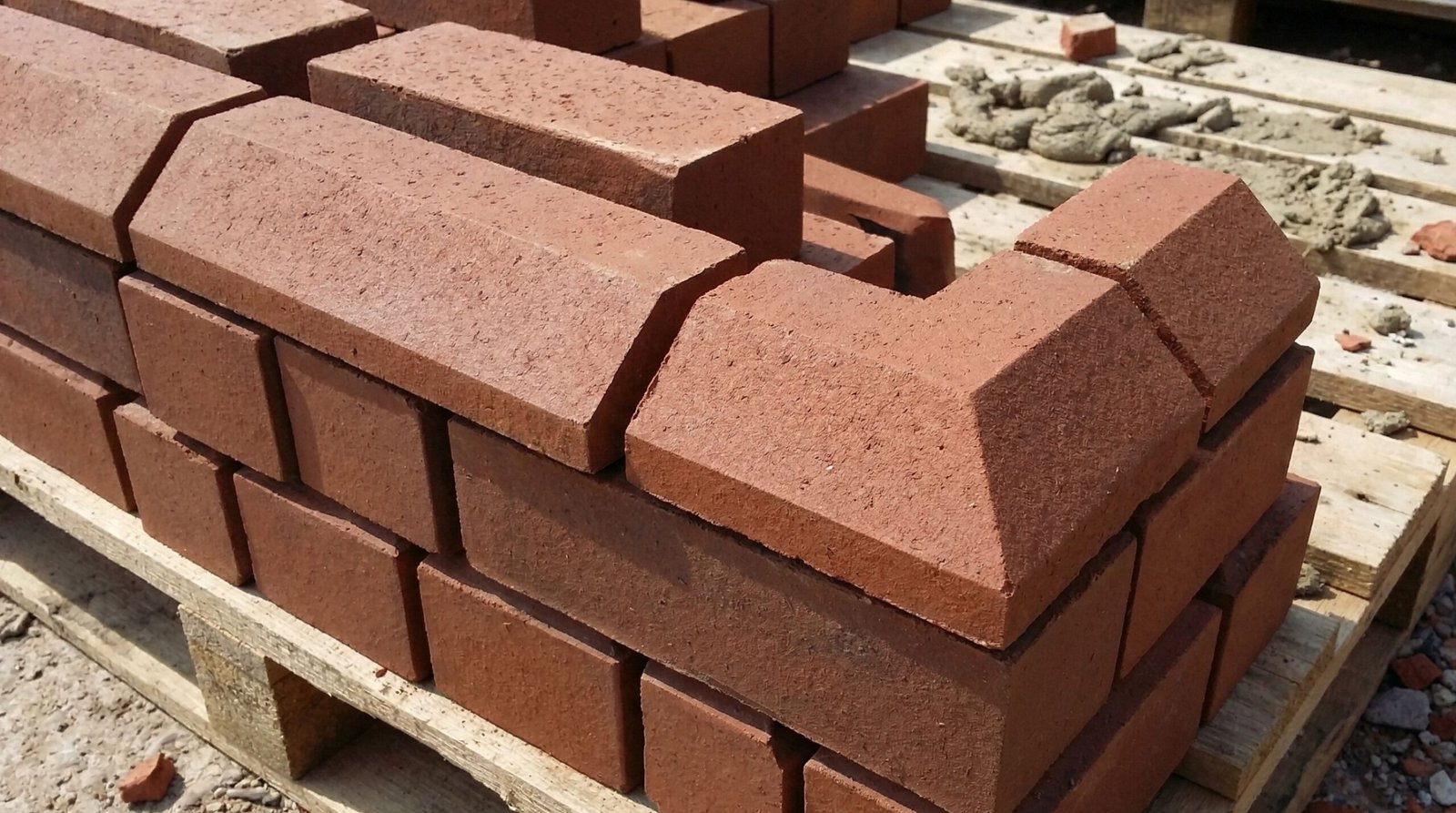
What They Are
Plinth bricks are used specifically at the very bottom of a wall, right above the ground. The top of the brick slants backward. They act as a transition piece between the wider, thicker foundation hidden in the dirt and the thinner, visible wall that goes up to the roof.
How They Are Made
These blocks are molded with a thick base and a top face that slopes inward. Because they sit right near the soil, they are often made from dense clay and baked at high heat. This makes them act almost like engineering blocks, stopping moisture from the ground from creeping up into the dry wall above.
Best Uses
You use a row of these right above the soil line of a house. The slanted top creates a visual base for the building, making it look grounded and strong. More importantly, when rain hits the wall and runs down, the slanted top of the plinth kicks the water away from the foundation block hidden below.
Advantages
- They provide an elegant base to any large wall.
- They keep rain water away from the hidden foundation.
- They offer a strong barrier against ground moisture.
Disadvantages
- They add extra steps to the early building process.
- They cost more than using standard blocks at the base.
- They must be laid perfectly level to start the wall correctly.
22. Arch Bricks
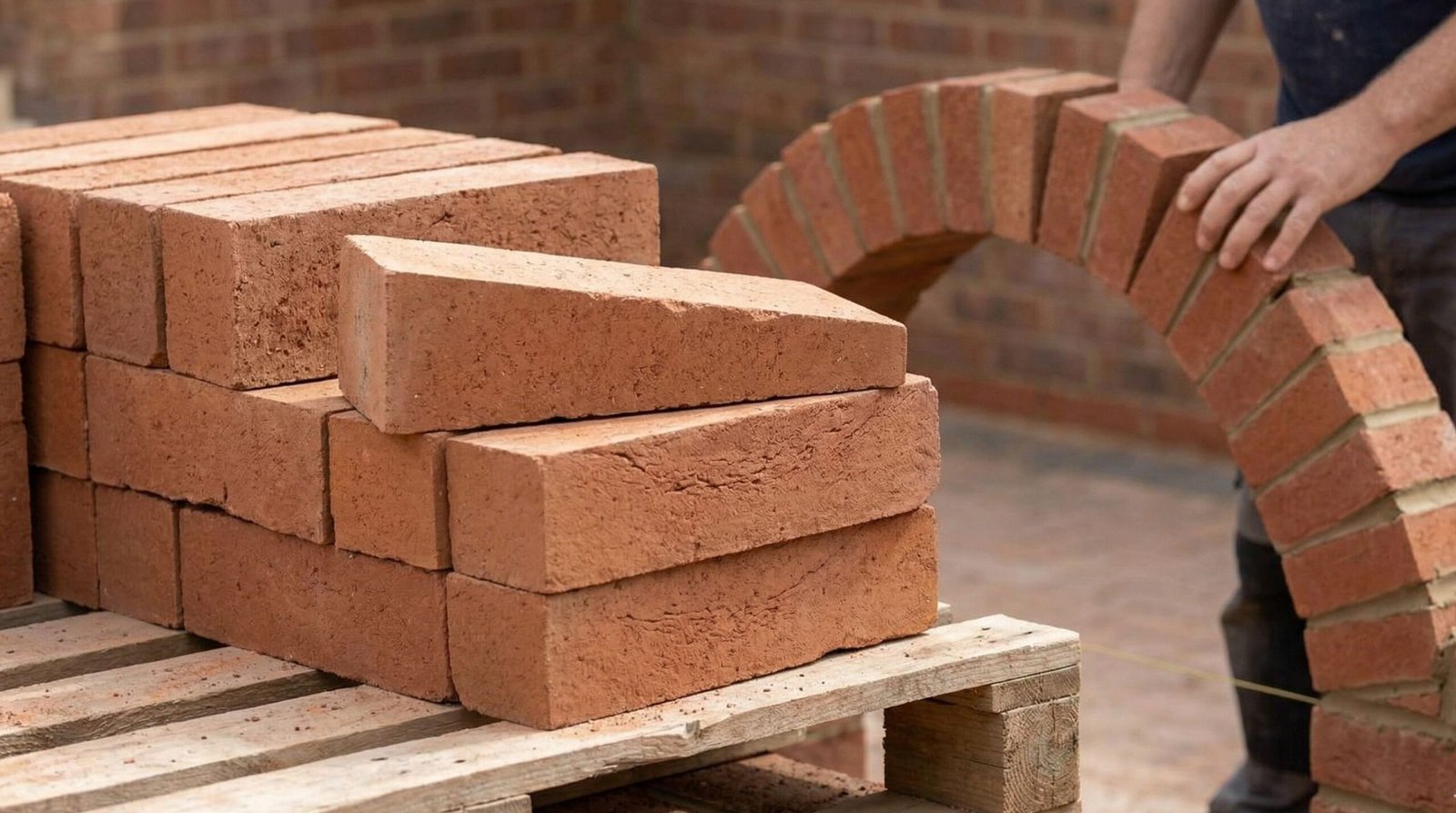
What They Are
Arch bricks are wedge shaped blocks. If you look at them from the side, the top is slightly wider than the bottom. They look like a slice of pie with the pointy tip cut off. This specific shape allows them to form an arch over a doorway or window that can hold massive amounts of weight.
How They Are Made
The manufacturing process must be incredibly precise. The angle of the wedge determines how wide the final arch will be. The manufacturer calculates the angle so that when the blocks form a semi circle, they squeeze together perfectly tightly. They are baked to high strength because the pressure inside an arch is huge.
Best Uses
Whenever you want a beautiful curved top over a window, a door, or a garden gate, you use arch bricks. You build a temporary wooden frame, lay these blocks over it, and place a special center block called a keystone at the very top. When you remove the wood, the wedge shapes push against each other, locking the arch in place forever.
Advantages
- They create beautiful, classic curved openings.
- An arch is one of the strongest structural shapes possible.
- They eliminate the need for weak mortar at the bottom of the curve.
Disadvantages
- Building an arch is very slow and requires temporary wooden supports.
- Only highly experienced masons should install them.
- They are completely useless for straight walls.
23. Laterite Bricks
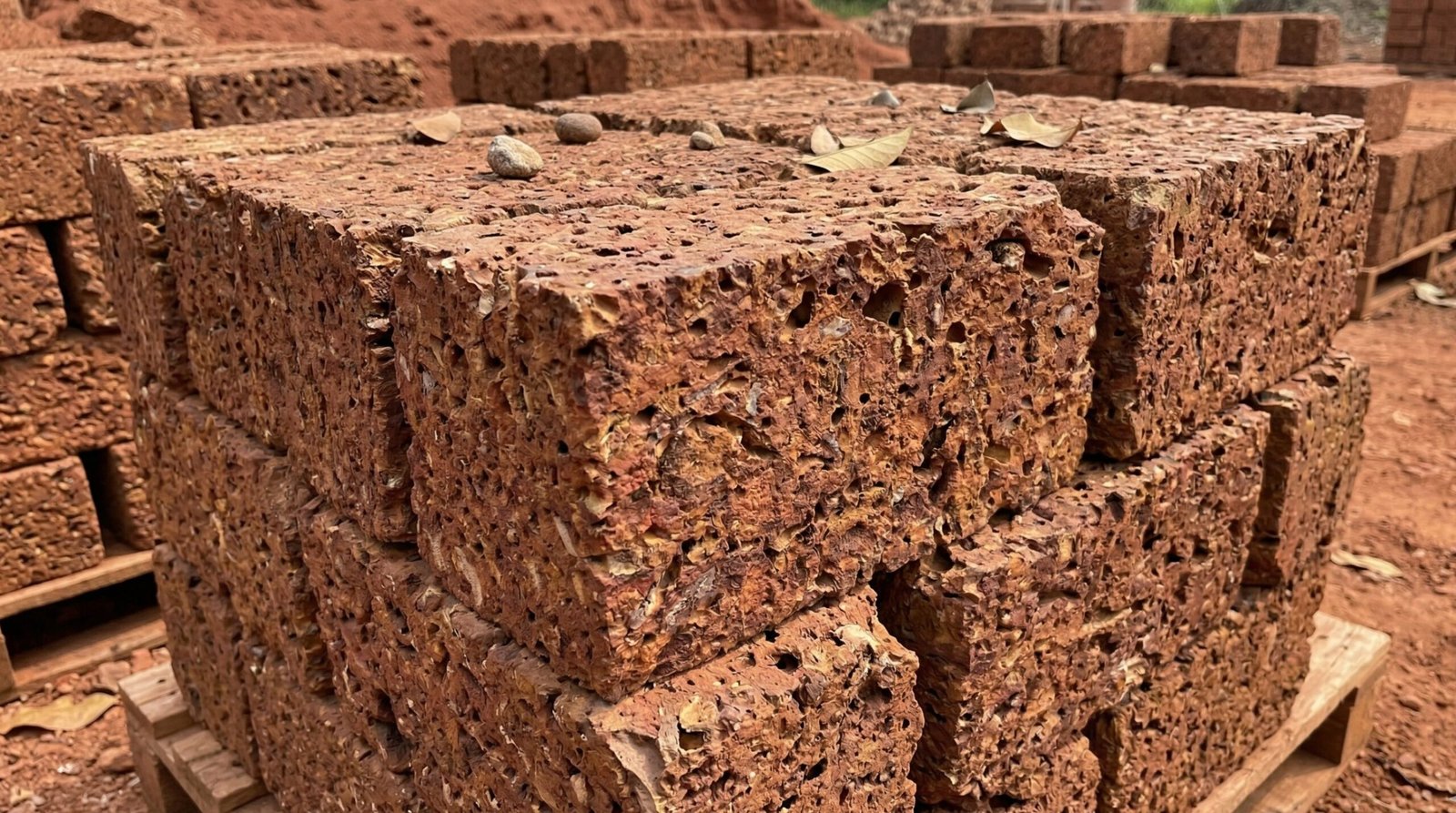
What They Are
Laterite bricks are natural building blocks cut straight from the earth. They have a rusty red color and a very porous, spongy texture with lots of tiny holes. They are very popular in tropical regions where this specific type of soil is abundant.
How They Are Made
Unlike all the other types we discussed, manufacturers do not mix or mold laterite. Instead, workers find a pit of soft laterite soil. They use large spades to slice block shapes directly out of the wet ground. When the wet dirt is exposed to the air and sun, an amazing chemical reaction happens. The high iron content turns the soft dirt into hard rock.
Best Uses
In tropical climates, builders use these for everything from house walls to garden boundaries. Because they have tiny holes, they actually breathe very well, keeping houses cooler in hot climates. They also provide a beautiful, natural, rustic look that blends in perfectly with nature.
Advantages
- They are completely natural and require zero fuel to make.
- They become harder and stronger as they get older.
- They provide excellent cooling in hot climates.
Disadvantages
- They absorb water easily if not plastered correctly.
- They are only available in regions with laterite soil.
- Their rough shape requires very thick mortar lines.
Comparison Chart of Major Brick Types
To help you choose the best material for your specific job, we have created a simple chart comparing the durability, cost, and best use of these materials.
| Brick Type | Durability | Cost Level | Best Use Case |
|---|---|---|---|
| Sun-Dried Clay | Very Low | Very Low | Dry climates, temporary structures |
| Burnt Clay | High | Medium | Standard house walls |
| Fly Ash | High | Low to Medium | Eco-friendly multi story buildings |
| Concrete | Very High | Medium | Foundations, soundproof walls |
| Sand-Lime | High | Medium to High | Exposed interior walls, modern finishes |
| Engineering | Extreme | High | Sewers, basements, heavy loads |
| Firebricks | Extreme (Heat) | High | Fireplaces, pizza ovens, furnaces |
| Facing Bricks | High | High | Beautiful exterior facades |
| Common Bricks | Medium | Low | Hidden internal walls |
| Veneer Bricks | None (Decorative) | Medium | Interior design, kitchen walls |
| Hollow (Cellular) | Medium | Medium | Partition walls, insulation |
| Perforated | Medium High | Medium | Strong multi story walls |
| Paving Bricks | Very High | Medium | Driveways, walkways, patios |
| Bullnose Bricks | High | High | Safe, rounded corners and edges |
| Cownose Bricks | High | High | Elegant capping for thin walls |
| Channel Bricks | High | Medium | Water drainage and rain management |
| Coping Bricks | High | Medium to High | Wall protection from heavy rain |
| Curved Sector Bricks | High | High | Circular pillars and round structures |
| Cant Bricks | High | High | Angled decorative window edges |
| Squint Bricks | High | High | Unusual or angled building corners |
| Plinth Bricks | Very High | High | Wall bases protecting foundations |
| Arch Bricks | Extreme (Under Pressure) | High | Curved doorways and window tops |
| Laterite | Medium | Low (in region) | Tropical region housing |
Frequently Asked Questions
People often ask us the same questions when they are planning their construction projects. We have answered the most common questions below to help you learn even more.
Ready to Start Your Project?
Now that you know exactly which type of material you need, the next step is figuring out how much to buy. Do not guess and waste your money on extra materials! Find out exactly how many units you need for your wall, driveway, or house in just a few seconds.
Use Our Free Brick Size Calculator